
Last updated October 15, 2026
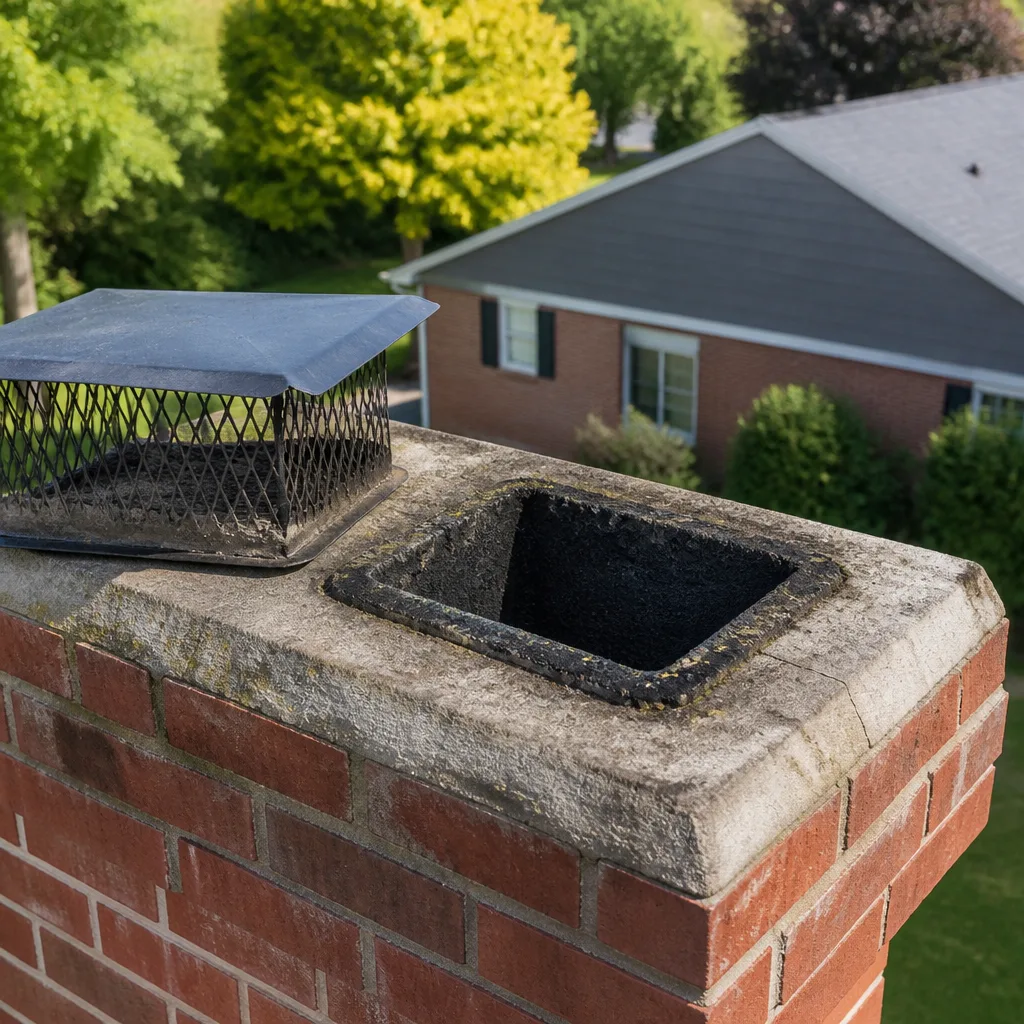 Sweep & inspection
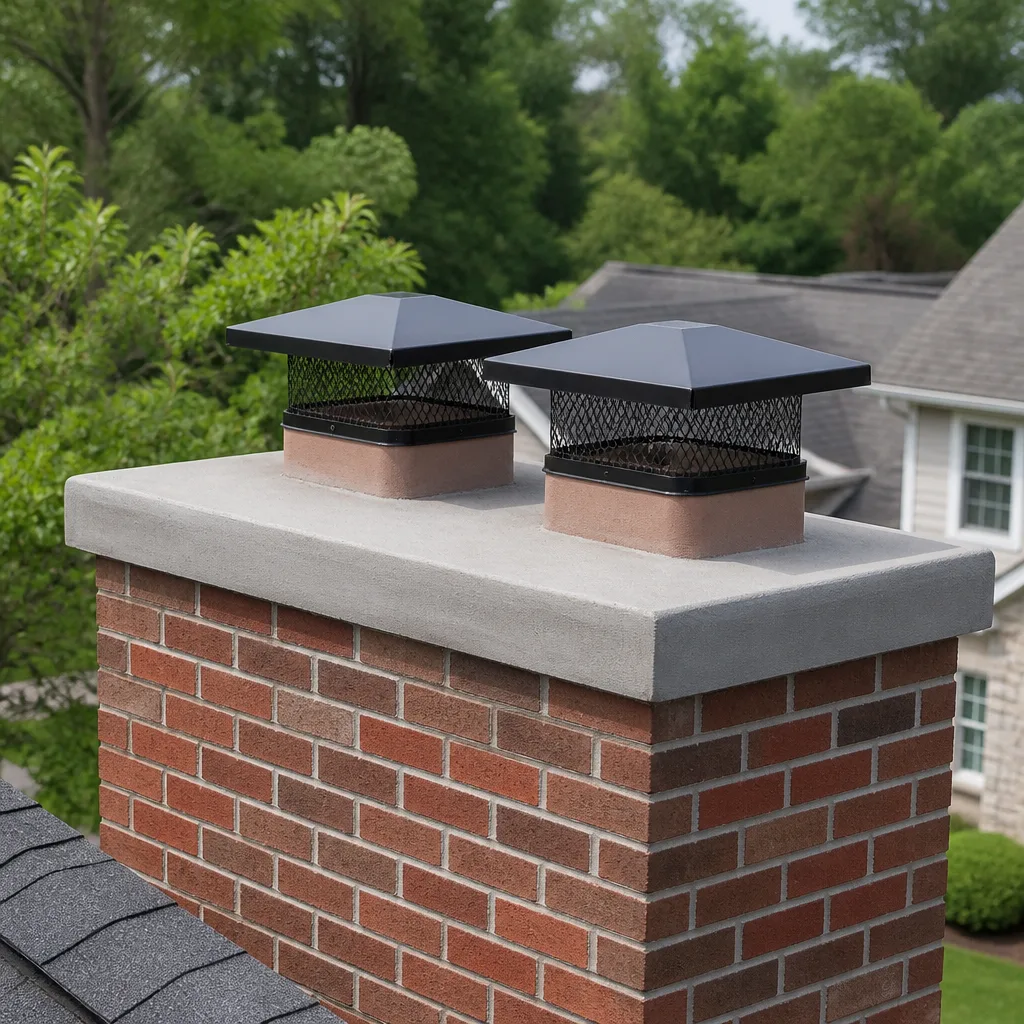 Caps & crowns
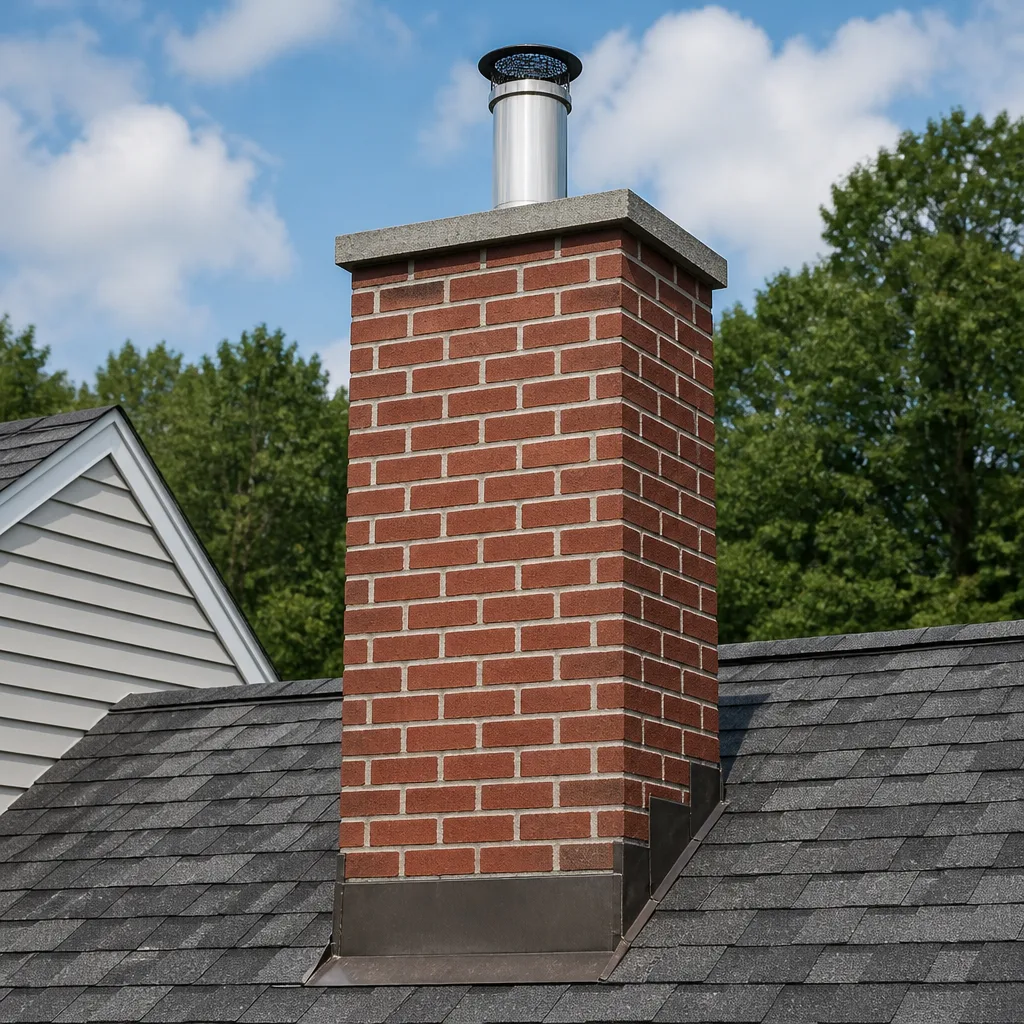 Flue relining
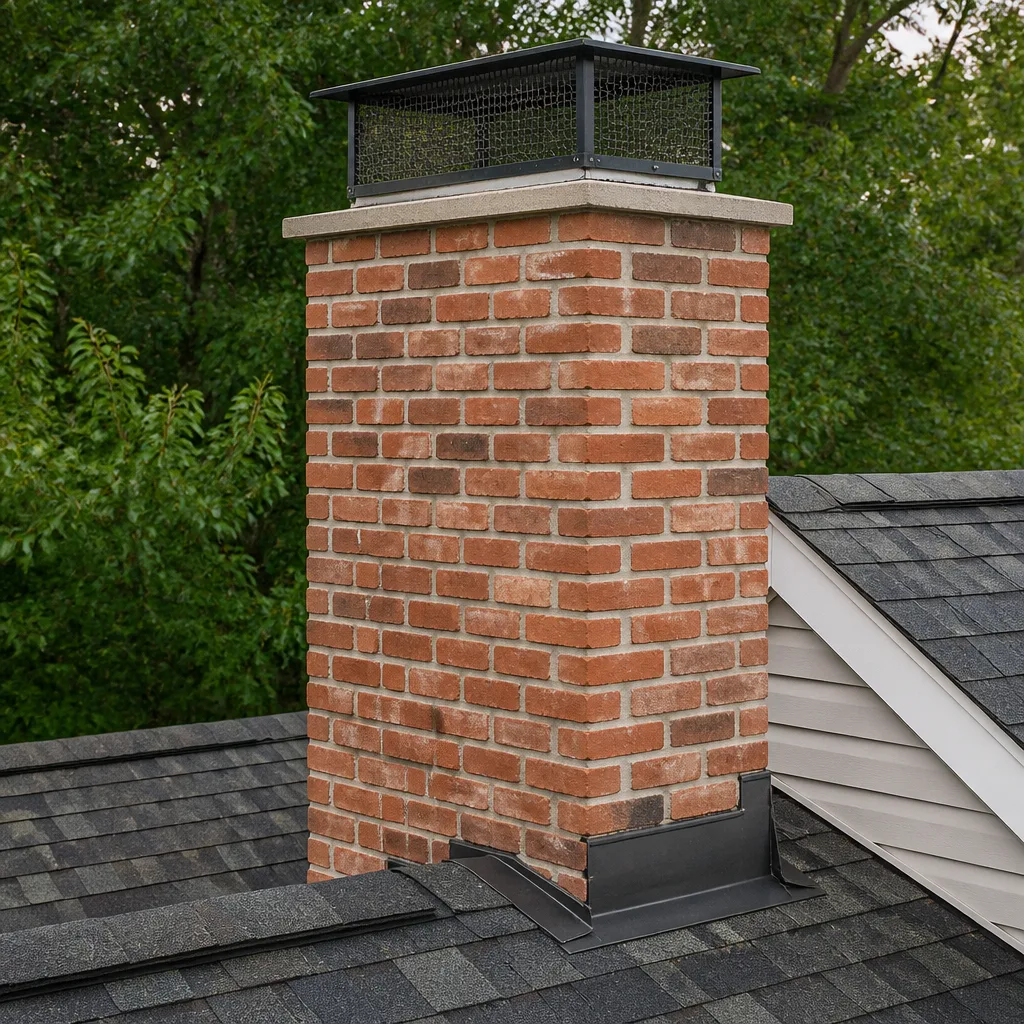 Masonry repair
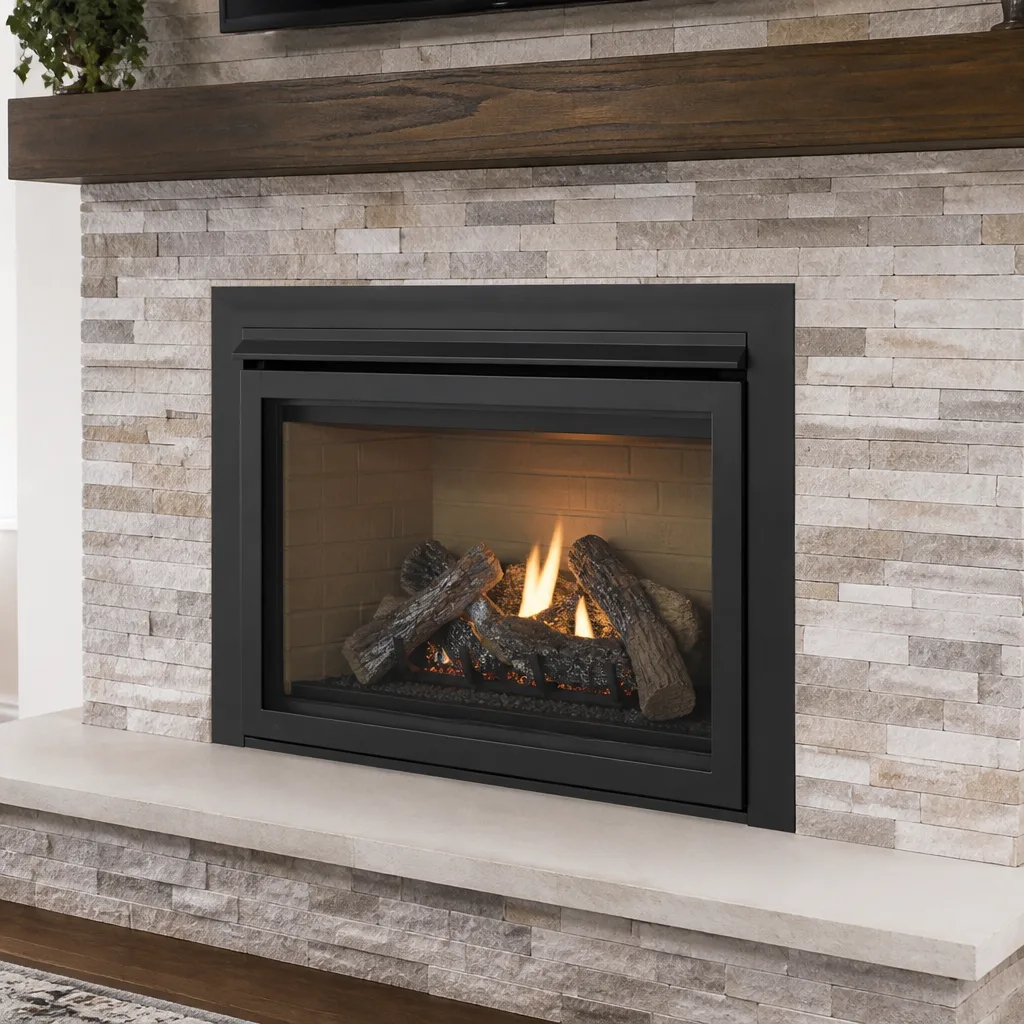 Gas fireplace service
Level 1 sweep and inspection to the NFPA 211 annual standard - flue, crown, cap, and flashing checked and photographed
Chimney sweep logs do not sweep chimneys. They loosen some creosote - which then falls where a brush and vacuum still have to collect it.
Chimney Cleaning Warning Signs: A Fort Worth Homeowner’s Reference Guide
A white stain running down your chimney’s exterior bricks isn’t cosmetic. It’s called efflorescence, and it means water has been moving through your masonry long enough to carry dissolved salts out with it. That’s a structural problem wearing a paint problem’s clothes. This guide matches each chimney symptom to its likely cause and gives you a concrete next step, so you can make an informed call instead of guessing whether to light a fire or call a pro. For additional help, see our DIY vs Professional Chimney Cleaning: The Fort Worth Homeowner’s Decision Guide. Fort Worth’s specific climate, from spring storms to summer heat, shapes how these warning signs show up and how urgent they actually are.
Quick Answer
The most common chimney warning signs in Fort Worth homes are smoke entering the living space, white staining on exterior brick (efflorescence), a rusted damper, crumbling mortar joints, dark oily creosote residue, summer chimney odors, animal noises, and visible firebox cracks. Any one of these means your chimney needs professional attention, but the urgency varies widely. Smoke entering the room, a petroleum-like odor, or a rusted-through damper means stop using the fireplace until a certified tech inspects it. White staining or minor mortar spalling means schedule service in the coming weeks, but don’t panic.
Styles & brands we work with
Table of Contents
- The Symptom-to-Cause Index: Eight Warning Signs Decoded
- Schedule Soon vs. Stop Now: The Urgency Split
- Why Fort Worth Summers Make Chimney Odors Worse
- How to Document Warning Signs With Your Phone
- The Three Warning Signs Homeowners Dismiss That Actually Matter
- What Chimney Service Costs in Fort Worth
- Common Mistakes to Avoid
- When to Call a Professional
The Symptom-to-Cause Index: Eight Warning Signs Decoded
Most chimney warning sign lists are vague enough to be useless. “Visible damage” tells you nothing. “Strange smell” could mean a dead raccoon or a cracked liner, and those are very different problems with very different price tags. Here’s the honest version: what each symptom actually looks like, what it usually means in Fort Worth homes, and what to do about it.
1. Smoke entering the room instead of going up the flue
You light a fire and within minutes, the living room gets hazy. You might smell smoke long after the fire is out. In our experience, this symptom is the one we tell homeowners to take most seriously. The cause is usually one of three things: a blocked flue (creosote buildup, a bird nest, or fallen masonry), a drafting problem (the chimney isn’t pulling air correctly, often because the house is too tightly sealed or the flue is the wrong size), or a damaged damper that’s not opening fully. In older Fort Worth neighborhoods like Arlington Heights or Fairmount, we regularly see homes where decades of creosote have narrowed the flue opening so much that smoke has no clear path out. This one means stop using the fireplace and schedule an inspection.
2. White staining on exterior bricks (efflorescence)
Efflorescence looks like chalky white streaks or patches on the outside of your chimney, and it appears because water is moving through your masonry. Fort Worth’s freeze-thaw cycles during winter and our spring downpour months accelerate this. Water seeps into tiny cracks in the brick or mortar, dissolves the natural salts inside, and then evaporates out the surface, leaving the salt behind as a white stain. The stain itself is harmless to your health. But it’s evidence that water is inside your chimney system, and water inside masonry is never harmless for long. The next stage is spalling, which means the brick faces actually start popping off. White staining means book a chimney inspection. It does not mean your chimney is about to collapse this week.
3. A rusted damper
The damper is the metal flap inside your chimney that opens and closes to let smoke out and keep rain, birds, and drafts from coming in. When you look up into your fireplace and see orange-brown rust coating on the damper, that’s a sign that water has been entering from above, usually because the chimney cap is missing or damaged, or the crown (the concrete slab at the top of the chimney) has cracks. Fort Worth’s thunderstorms can dump an inch of rain in an afternoon, and a missing cap means every one of those storms sends water straight down into your firebox. A rusted damper that’s simply discolored but still moves freely can usually wait a few weeks for service. A damper that’s rusted so badly it won’t move at all, or that looks like it’s flaking apart, is a bigger issue. It means the water problem is advanced and you may need a damper replacement rather than a repair. Stop using the fireplace until it’s evaluated.
4. Crumbling mortar joints
Run your finger along the mortar lines on your chimney’s exterior, the gray lines between bricks. If small granules come away, or you can see gaps where the mortar has receded more than a quarter-inch deep, that’s called spalling mortar. It’s the chimney equivalent of receding gums. In Fort Worth, the combination of intense summer heat expanding the masonry and winter cold contracting it works the mortar loose over time. Minor mortar wear means schedule repointing, also called tuckpointing, a process where the tech scrapes out the old mortar and presses in fresh. It’s a normal maintenance item on older chimneys. But if the mortar is so deteriorated that you can wiggle bricks with your hand, or you see bricks that have shifted out of alignment, that’s structural. Don’t use the fireplace and call a professional right away. Loose bricks near the top of the chimney are a falling hazard.
5. Dark oily residue on the fireplace walls or damper
Creosote is the flammable tar-like substance that builds up on the inside of your chimney every time you burn wood. For a deeper look at managing it, read The Complete Guide to Chimney Cleaning in Fort Worth. In small amounts, it’s a normal byproduct. In large amounts, it’s the number one cause of chimney fires in Fort Worth and everywhere else in the country. Creosote appears in three stages: Stage 1 is a fine, flaky black soot that brushes off easily. Stage 2 is those crunchy, shiny black flakes that look like burnt popcorn. Stage 3 is the dangerous one. It’s a thick, tarry, glossy coating that looks like it was poured on, and it can be sticky or hard. If you can reach into your fireplace, and you don’t have to reach far, and you see a shiny black coating that looks wet even though the fireplace is cold, that’s Stage 3. It burns extremely hot once it ignites and is very difficult to extinguish. A chimney fire can reach over 2,000 degrees Fahrenheit inside the flue, hot enough to crack the liner and transfer heat to the framing of your home. This sign means don’t light another fire. Period. Schedule a chimney sweep.
6. Chimney odors in summer, even though you haven’t had a fire in months
Fort Worth homes deal with this more than most regions, and there’s a specific reason why. More on that in the dedicated section below. For now, the short version: if you notice a smell coming from your fireplace in July or August, and you haven’t had a fire since March, you’re smelling creosote that’s been sitting in your flue all spring. The smell intensifies in heat and humidity. The exact smell matters. A sharp, petroleum-like, asphalt or tar smell indicates heavy creosote buildup and possibly a chimney fire risk. A musty, damp, rotting smell usually means water is getting in and mold or mildew has formed, or an animal has died in the chimney. Both mean an inspection. The petroleum smell means don’t use the fireplace until it’s cleaned.
7. Animal sounds coming from the chimney
Scratching, chirping, flapping, or scurrying sounds coming from your chimney indicate you have wildlife living in it. In Fort Worth, the most common culprits are chimney swifts, which are federally protected and cannot be removed while nesting, squirrels, and raccoons. Raccoons sound like something much larger than a squirrel, heavier thumping and chittering. Chimney swifts sound like high-pitched chirping. What animals mean for your chimney: they bring nesting material that blocks the flue, creating a drafting problem and a fire hazard. Their droppings can carry histoplasmosis. And a dead animal in the chimney creates a smell you will not mistake for anything else. If you hear animals and the sounds are active, do not light a fire. The animal could be trapped. Do not try to smoke it out. Call a chimney professional who can assess whether the animal is currently present, advise on legal removal if it’s a protected species like a chimney swift, and then install a proper chimney cap to prevent reentry.
8. Visible cracks in the firebox
The firebox is the chamber where you build the fire, the brick or stone box directly behind your fireplace opening. Cracks in the firebox walls or floor are a warning sign that should never be ignored because the firebox is what contains your fire. A cracked firebox lets heat escape into the surrounding wall framing. Over time, that framing can dry out and catch fire. Firebox cracks in Fort Worth homes are commonly caused by water damage (from the same leaks that cause efflorescence), by years of thermal expansion and contraction, or by using the wrong mortar when the firebox was built or repaired. Small hairline cracks that haven’t widened may just need sealing with the right refractory material. Larger cracks, or cracks where you can see into a gap, need professional repair before the fireplace is used again. These are not DIY fixes. A firebox repair used incorrectly won’t withstand the heat and can fail while a fire is burning.
Schedule Soon vs. Stop Now: The Urgency Split
Every chimney warning sign falls into one of two buckets. Getting this split right is the difference between handling a maintenance item and preventing a fire or carbon monoxide problem. Here’s the breakdown, no scare tactics, just the facts.
Signs that mean “schedule service in the next few weeks, but don’t panic”
- White efflorescence staining on exterior bricks. The water issue is real and should be addressed, but this is a slow-moving problem. Weeks of delay will not meaningfully change the outcome.
- Minor mortar spalling where the mortar is receding but bricks are still solid and unmoving.
- A damper with light surface rust that still opens and closes. You have a water entry issue to fix, but it’s not urgent.
- A flaky black soot coating (Stage 1 creosote) that brushes off easily. It’s time for a sweep, but this is normal buildup, not a crisis.
- Active animal sounds from spring through early summer, assuming the animal is likely a chimney swift. Protected species rules mean the work has to wait until the birds leave anyway.
- A musty odor that suggests water entry. It’s a problem to fix, but not one that means the house is in immediate danger tonight.
Signs that mean “do not light another fire until a professional has looked at this”
- Smoke entering the room during use. This means the path for smoke, carbon monoxide, and other combustion byproducts to exit your home is compromised.
- Stage 3 creosote, the shiny, tarry, glossy black coating. This is actively flammable and the primary cause of chimney fires.
- A sharp petroleum or asphalt smell coming from the fireplace. That’s the smell of heavy creosote and it means the same as seeing it.
- Visible gaps or cracks in the firebox that are wide enough to see into. Heat has a direct path to your home’s structure.
- A damper that is rusted through or will not move. The chimney cannot be properly controlled and water damage is significant.
- Bricks that are loose, shifted, or missing from the chimney structure. Beyond fire risk, this is a physical safety risk from falling debris.
If you’re unsure which bucket your symptom falls into, photograph it and call a chimney professional. A quick conversation with a tech who’s seen hundreds of Fort Worth chimneys will usually sort it out in two minutes. The calls we answer at Hadley Chimney Fort Worth, at (682) 900-6393, are answered by a real person around the clock, so you’re never leaving a voicemail and wondering whether your fireplace is safe tonight.
Why Fort Worth Summers Make Chimney Odors Worse
Here’s a scenario we hear from homeowners across Fort Worth every summer. The fireplace has been dormant since March. It’s now mid-July, the temperature is 102 degrees outside, and the living room suddenly smells like a campfire that burned out a week ago. Or worse, like hot asphalt. Nobody lit anything. What’s happening?
The answer is simple physics, and it’s amplified by Fort Worth weather specifically. Creosote, the byproduct of wood burning, never fully goes dormant. It’s a semi-volatile organic compound, which means it releases gases more readily as temperature increases. When your attic and chimney chase heat up in the Texas summer sun, that heat radiates down into the flue. The creosote inside warms up, and it starts off-gassing. Those gases travel down the flue and into your living space. The hotter it gets outside, the stronger the smell inside. High humidity makes it worse, and Fort Worth summers have both heat and humidity in abundance.
The smell itself tells you something useful. A campfire-like or smoky smell means there’s a moderate creosote buildup that should be cleaned, but it’s not an emergency. A sharp, petroleum, tar, or asphalt smell indicates Stage 3 creosote, which is a genuine chimney fire risk and the exact condition we clean for most often in Fort Worth homes that burn wood regularly. A musty, damp, mildew-like smell in summer is different. That means water is getting into the chimney somewhere, usually through a failed chimney cap or a cracked crown, and the summer heat is speeding up microbial growth inside the chimney. That’s a repair issue, not a cleaning issue.
The summer chimney odor problem has a straightforward fix. A professional chimney sweep removes the creosote, eliminating the source of the smell entirely. If the smell is coming from water damage, the fix is repairing the entry point and addressing any mold or mildew inside. Fort Worth’s long hot season means if you’re noticing an odor in July, it will still be there in August, and probably stronger. The problem doesn’t self-correct.
How to Document Warning Signs With Your Phone
Every smartphone in your pocket is a diagnostic tool that chimney professionals now expect you to use. Before you call a chimney company in Fort Worth, a few photos and videos will change the quality of the conversation entirely. Here’s exactly what to capture, and why it matters.
Step-by-step: what to photograph before you call
- Photograph the warning sign itself. If it’s efflorescence on the exterior, walk around the chimney and capture it from multiple angles, including any areas where the staining is darkest. If it’s a firebox crack, get as close as your phone will focus and use the flash. Good lighting matters more than a steady hand.
- Photograph the full chimney from ground level. Stand back far enough to capture the entire chimney structure, top to bottom. This gives the tech a sense of the chimney’s height, its location on the roof line, and its overall condition before they ever arrive. Include the roof line if possible.
- Photograph the damper from inside the fireplace. Put your phone inside the firebox and aim the camera straight up. Use the flash. A clear shot of the damper, even a partially obscured one, tells a chimney tech more than a verbal description ever will. You don’t need to get your head in there. Just your phone.
- Record a 10-second video of any animal sounds. Hold your phone near the fireplace opening and record. Chimney swifts, squirrels, and raccoons make very distinct sounds, and hearing them directly helps the tech identify the animal without actually seeing it.
- Photograph any water stains on the ceiling or walls near the fireplace. These often accompany chimney leaks and help pinpoint where water is traveling once it enters the home. Water staining on drywall near the chimney is diagnostic.
- Write down when you first noticed the warning sign. A few words in your notes app is enough. “Efflorescence first noticed March 2025, appears larger now than six months ago” is genuinely useful clinical history for a chimney. So is “odor started in June, strongest after rain, smells like tar.”
At Hadley Chimney Fort Worth, every job includes before-and-after photo documentation as part of The Relay Visibility Guarantee, so the photos you take are also the baseline against which the repair or cleaning gets documented. You’re not just showing a tech what to look for. You’re starting the paper trail. If something changes after the service, you’ll have your own photos to compare.
The Three Warning Signs Homeowners Dismiss That Actually Matter
Some chimney problems announce themselves loudly. A raccoon in the flue is impossible to ignore, and smoke pouring into the living room commands immediate attention. But the warning signs that cause the most damage are the quiet ones, the symptoms that look like just part of owning an old house. These are the three we see most often dismissed in Fort Worth homes.
1. A fireplace that “has always been a little smoky”
Homeowners acclimate to mild smoke intrusion. It’s just how the fireplace works, they assume. It’s been that way for years. Nobody’s been harmed. But a fireplace that consistently lets even a small amount of smoke into the room has a drafting problem, and a drafting problem means combustion byproducts, including carbon monoxide, are not reliably leaving the home. Carbon monoxide is odorless and colorless, and the early symptoms of exposure (headache, fatigue, dizziness) are easy to write off as something else. A smoky fireplace is not a personality quirk. It’s a flue that’s not doing its job. In many Fort Worth homes built before modern building codes standardized chimney dimensions, flues were often built undersized, and we see this constantly in neighborhoods like Ryan Place and Berkeley. The fix is often straightforward, but it requires a professional diagnosis, not acceptance.
2. Crumbling mortar “just from old age”
Yes, old chimneys have old mortar, and mortar does deteriorate naturally over decades. But the difference between normal weathering and structural degradation is measurable, and dismissing spalling mortar as just an old-house thing means missing the point where it becomes a safety hazard. Mortar is what holds the chimney together. When it fails, the chimney’s structural integrity is compromised. Bricks lose their bind, water enters more freely, and in extreme cases, the chimney can partially collapse during a severe storm. Fort Worth sees strong storms every spring, and a chimney with weakened mortar is more vulnerable when the wind really gets going. Repointing is a standard maintenance procedure, and it costs far less than rebuilding a chimney section.
3. A little rust on the damper “but I never use the fireplace anyway”
The logic seems sound. If you don’t use the fireplace, does the damper condition matter? Unfortunately, yes, and for two reasons. First, a rusted damper means water is entering the chimney, and that water doesn’t care whether you use the fireplace. It’s still getting into the flue, the smoke shelf, and potentially the firebox, and it’s doing damage every time it rains. Second, even a fireplace that’s never used is an opening in your house. A damper that can’t close properly is letting air from your chimney into your living room, which means your HVAC system is working harder. In a Fort Worth August, that’s real money. A rusted damper is the symptom, not the disease, but the disease, water intrusion, doesn’t resolve on its own.
What Chimney Service Costs in Fort Worth
If you’ve never hired a chimney professional before, the cost question is usually the first one on your mind and the last one you want to ask out loud. Here are honest ranges for the services most commonly needed when a warning sign appears in a Fort Worth home. These figures reflect what we and other established chimney companies in the area typically charge in 2025 market conditions. Prices vary by chimney height, accessibility, flue size, and the type of repair needed.
Typical Fort Worth chimney service price ranges
| Service | Typical range | When it applies |
|---|---|---|
| Chimney sweep (standard) | $180 – $340 | Annual maintenance, Stage 1 – 2 creosote removal |
| Chimney sweep with heavy creosote (Stage 3) | $350 – $550 | Tar-like buildup requiring chemical treatment and multiple passes |
| Chimney inspection (Level 1, visual) | $100 – $250 | Pre-purchase checks, annual maintenance confirmation |
| Chimney inspection with camera (Level 2) | $250 – $500 | After a chimney fire, before a liner installation, after a storm |
| Damper replacement | $250 – $600 | Rusted or stuck damper, often combined with a sweep |
| Chimney cap installation | $250 – $550 | Missing cap, animal entry, water intrusion from above |
| Repointing / tuckpointing | $800 – $2,500 | Crumbling mortar, depending on chimney size and access |
| Firebox repair | $500 – $2,000 | Sealing cracks, replacing damaged firebrick |
| Chimney crown repair or rebuild | $600 – $1,800 | Cracked concrete cap allowing water entry |
| Flue liner installation (stainless steel, e.g. DuraFlex) | $2,500 – $6,000 | Cracked clay liner, chimney fire damage, fireplace conversion |
These are honest numbers, and they’re the kind of ranges you should expect from any reputable chimney company in Fort Worth. Anything dramatically lower is likely a bait-and-switch, where a cheap sweep turns into an aggressive upsell once the tech is on your roof. Anything dramatically higher without a clear explanation of material costs (brand names matter: DuraFlex liners, Copperfield caps, Famco dampers all carry different price points) deserves a second opinion.
At Hadley Chimney Fort Worth, a written price is provided before any work starts, every single time. There’s no surprise charge at the door. If a camera inspection reveals a liner issue, you’ll see the photos yourself before deciding anything. That’s the standard we’ve held since 2003, and it’s now formalized in The Relay Visibility Guarantee.
Common Mistakes to Avoid
- Ignoring a chimney smell because “it’s been there for a while.” Your nose adjusts to persistent odors, which means the thing you stopped noticing months ago is still there, and it might be getting worse. Ask a friend who visits whether they smell anything near the fireplace. If they do, it’s time.
- Burning a creosote log as a substitute for a professional sweep. Those logs can loosen some creosote, but they don’t remove it from the chimney. They can actually cause creosote flakes to fall and accumulate on the smoke shelf, creating a new fire hazard in a harder-to-reach spot.
- Painting over efflorescence instead of addressing the water source. Sealing or painting over efflorescence traps moisture inside the masonry, which accelerates spalling. The white staining is the symptom. Water entry is the problem.
- Waiting until fall to address a spring or summer chimney problem. In Fort Worth, chimney companies get booked solid from September through December. Summer is actually the ideal time for creosote removal, because the warm weather makes Stage 2 and 3 creosote more pliable and easier to remove completely.
- Assuming a gas fireplace doesn’t need chimney maintenance. Gas fireplaces still produce combustion byproducts, still need proper venting, and still can develop blockages. A gas fireplace that vents through a chimney needs that chimney maintained too.
- Hiring the cheapest option because all sweeps are the same. Chimney work is not a commodity, and Fort Worth has companies with wildly different standards. Look for a company that shows you photos, provides a written quote before starting, and backs the work with a written guarantee. If they won’t do those three things, keep calling.
- Getting a “free sweep” and then agreeing to thousands in repairs on the spot. A free or $49 sweep is often a foot-in-the-door upsell engine. There are legitimate discounts out there, but never agree to major repair work without seeing camera footage of the problem and getting a second opinion if the price feels high.
When to Call a Professional
Call a chimney professional if you see any of the warning signs described in this guide: smoke entering the room, efflorescence staining, a rusted or stuck damper, crumbling mortar, dark oily creosote, unexplained odors, animal sounds, or firebox cracks. If the sign falls into the “stop now” bucket, call immediately. If it falls into the “schedule soon” bucket, call within a few weeks, ideally before the fall rush. If you’re not sure which bucket you’re in, call anyway. That’s what phone calls are for. Hadley Chimney Fort Worth offers free estimates in Fort Worth. Call (682) 900-6393 and you’ll talk to a real person, day or night, who can help you figure out next steps.
See the difference
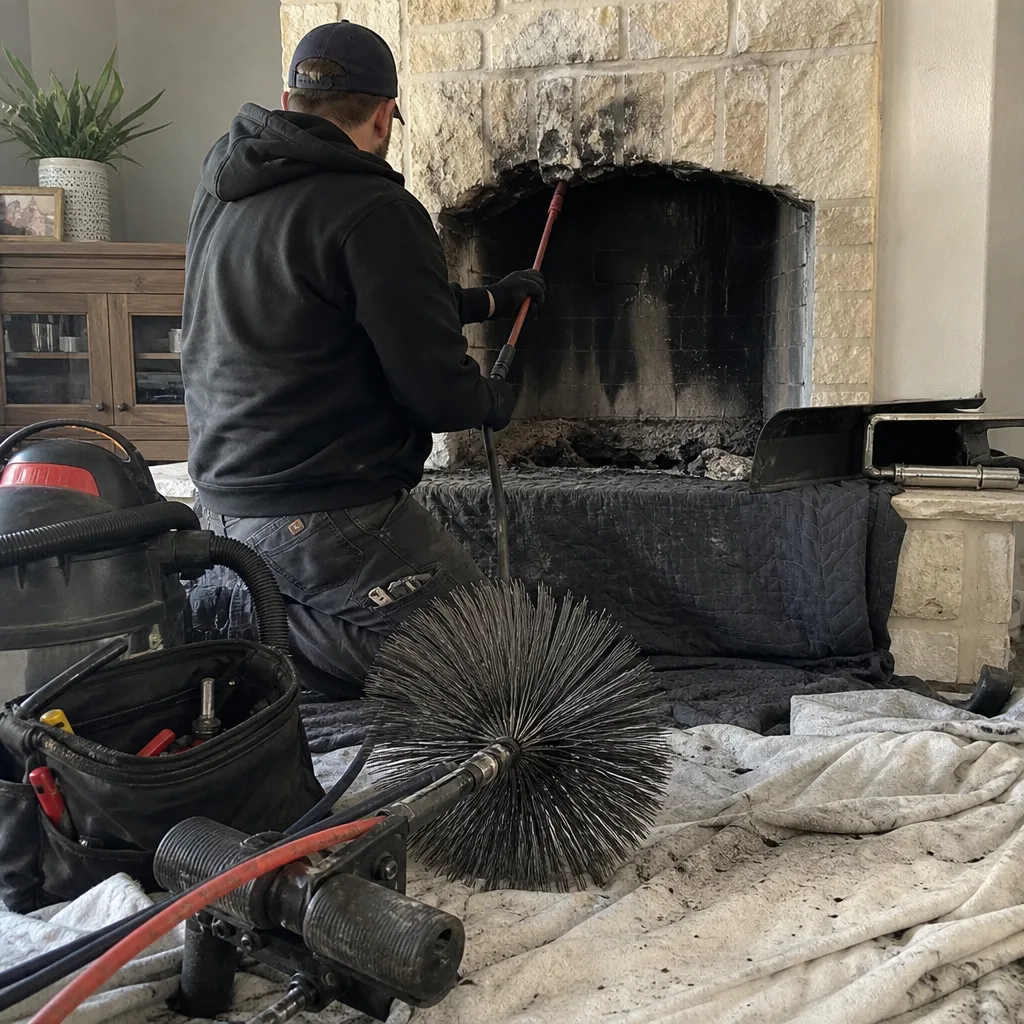 Before
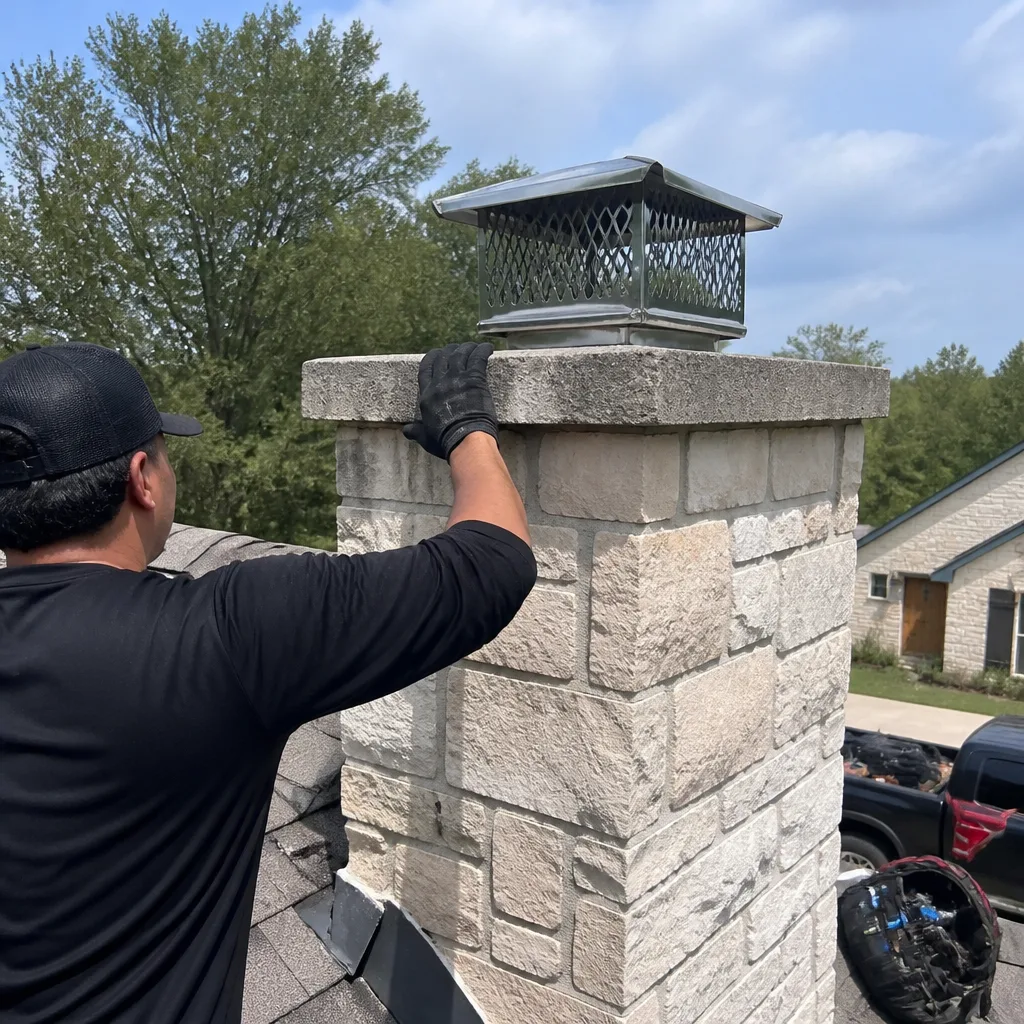 After
After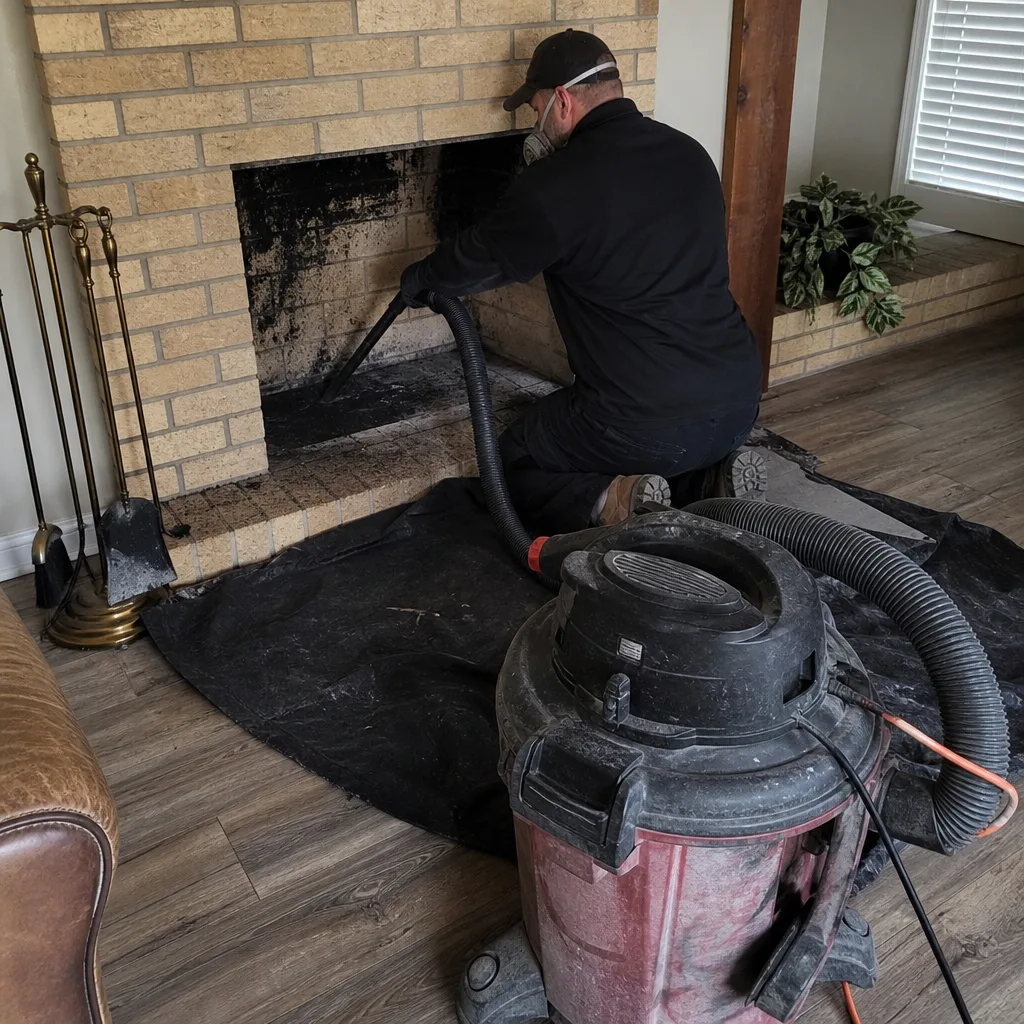 Before
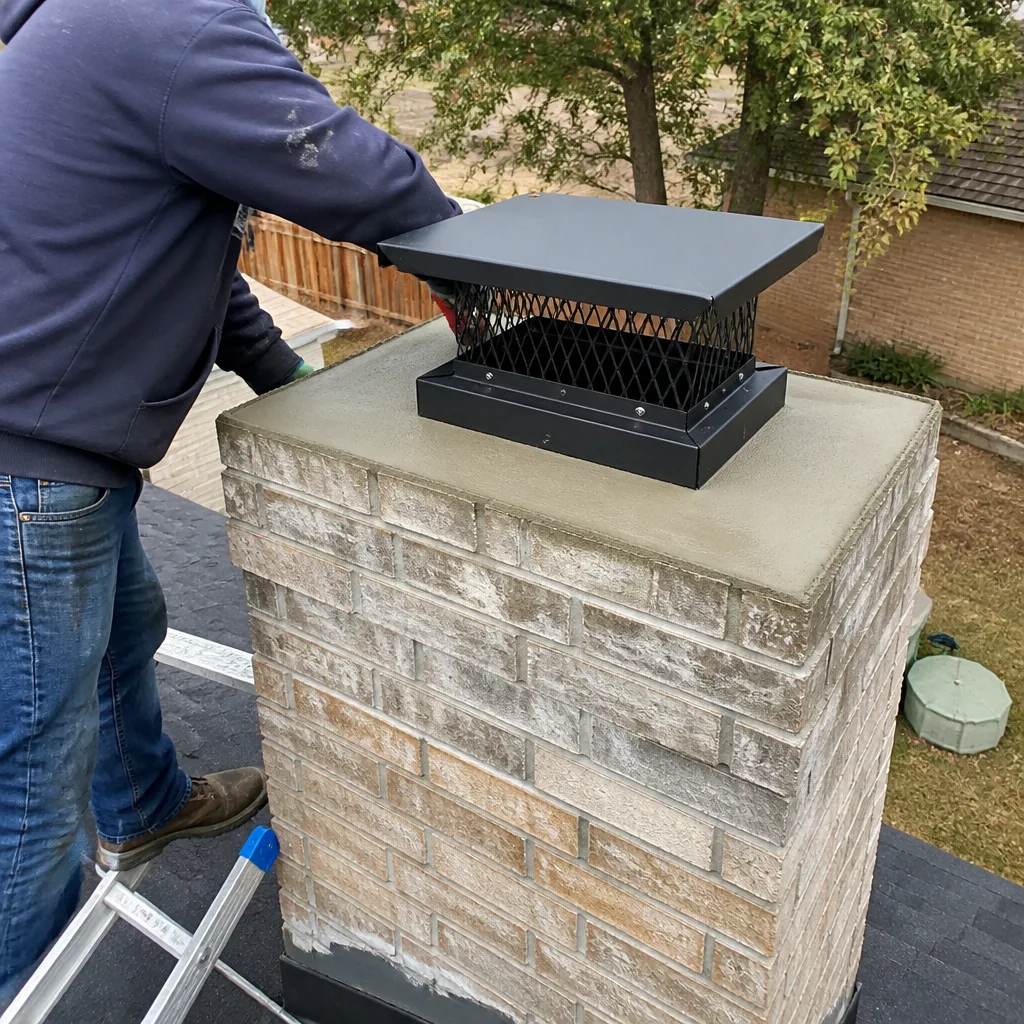 After
After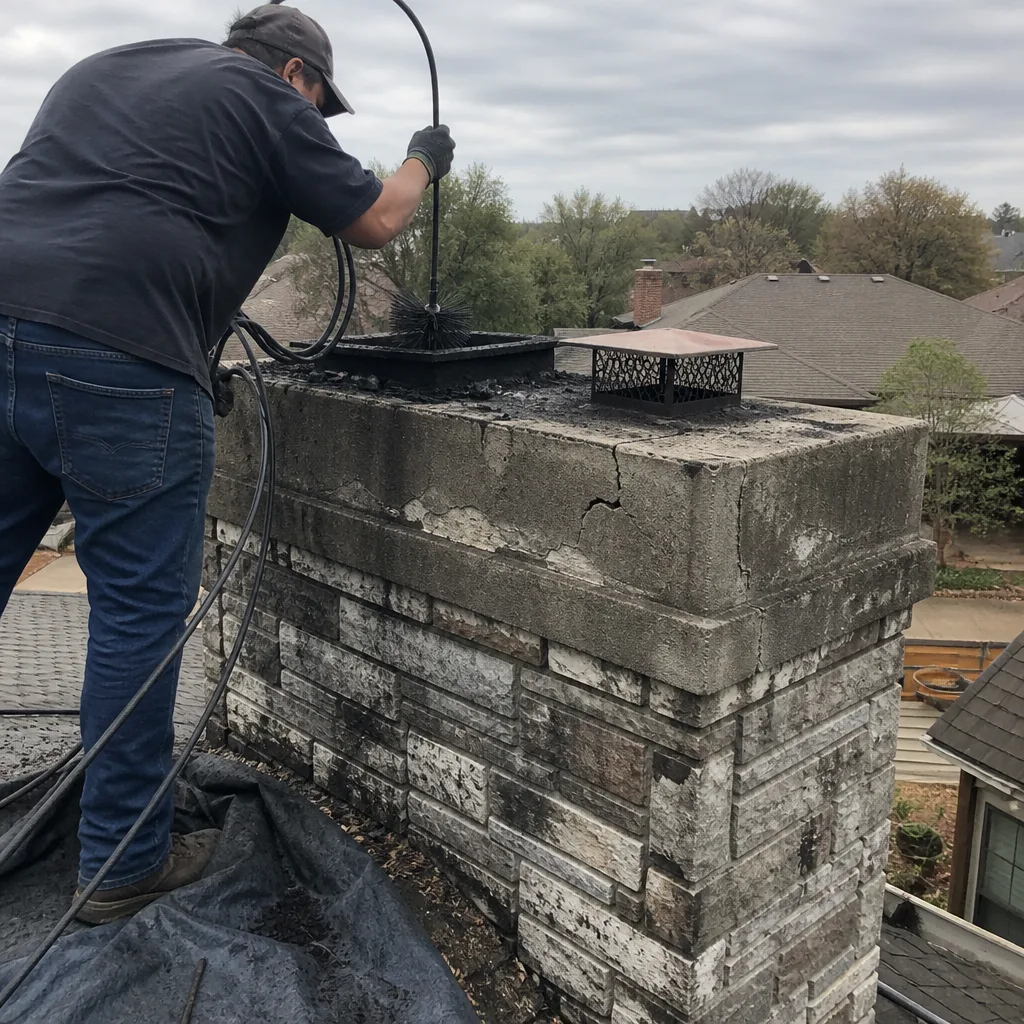 Before
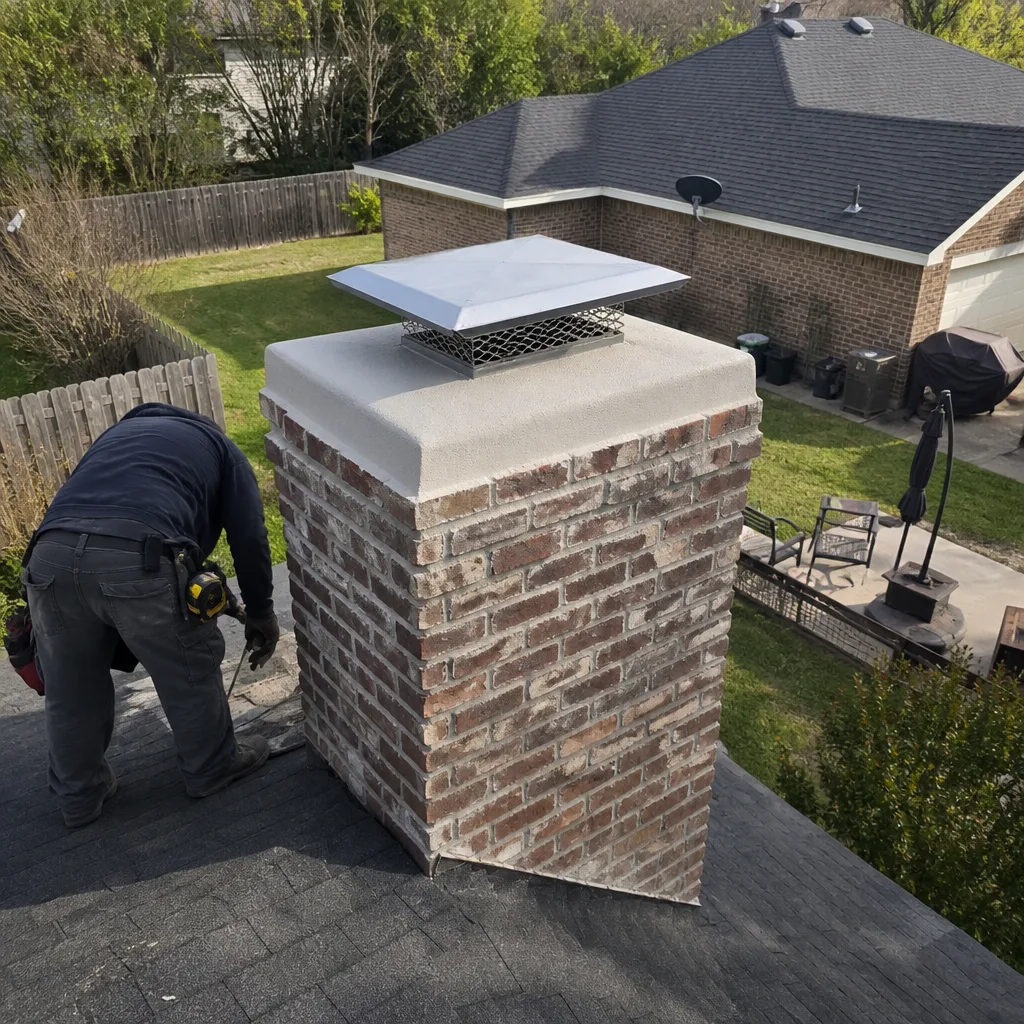 After
AfterFrequently Asked Questions
A standard chimney sweep in Fort Worth typically costs between $180 and $340, with heavy creosote removal running $350 to $550. The price depends on chimney height, roof access difficulty, and how much creosote has accumulated. Call (682) 900-6393 for an exact quote for your chimney, estimates are free.
The National Fire Protection Association recommends a chimney sweep at least once per year for wood-burning fireplaces, regardless of how often you use them. Use our Chimney Sweep Maintenance Checklist for Fort Worth Homeowners to stay on track. If you burn more than two cords of wood per season or burn unseasoned wood, you may need a sweep mid-season. A Fort Worth home that sees regular fireplace use from November through February should plan for an annual sweep in late summer or early fall, before the peak burning season begins.
You need a new liner if the existing clay tile liner is cracked, spalling, or missing sections, or if you’re converting to a different appliance type that requires a properly sized stainless steel liner. A camera inspection will show the condition clearly. At Hadley Chimney Fort Worth, you’ll see those photos yourself before anyone asks you to authorize a liner installation. We work with DuraFlex and other industry-standard liner brands because a liner is a structural and safety component, not a place to cut corners.
Creosote continues to accumulate, narrowing the flue and increasing the risk of a chimney fire, which burns at temperatures that can crack the liner and transfer heat to your home’s framing. Even without a fire, heavy creosote in a Fort Worth summer creates persistent odors, and the buildup can restrict the draft enough to push carbon monoxide back into the living space. Skipping a sweep doesn’t mean something will definitely go wrong. It means the probability of a fire or CO issue increases every year, and the costs to fix the problem increase along with the buildup.
A smoky or tar-like smell coming from your fireplace during a Fort Worth summer is common, but not normal. It’s caused by creosote off-gassing in the heat, and it means there’s enough buildup inside the flue that you should schedule a cleaning. The smell will intensify with heat and humidity, and it won’t go away on its own. Call (682) 900-6393 to schedule a sweep, and the odor source gets removed entirely.
Yes, efflorescence staining alone does not make the fireplace unsafe to use. It indicates water is entering the masonry and should be addressed, but it typically doesn’t affect the flue’s ability to safely vent smoke. However, if the white staining is accompanied by other signs, like interior water stains, a rusted damper, or loose bricks, stop using the fireplace and schedule an inspection before lighting another fire.
The Bottom Line
Chimney warning signs exist on a spectrum, and the most useful thing a Fort Worth homeowner can do is learn to read that spectrum accurately. White staining means water entry, and it can wait a few weeks. Tar-like creosote or smoke in the living room means stop now. Summer odors that smell like asphalt are a message from your chimney, and the heat and humidity of a Texas summer make them louder. Your phone camera is a diagnostic tool, your nose is a diagnostic tool, and the decision of whether to call should never require guessing. Explore more guides & resources to keep your chimney safe year-round. When in doubt, call. A real person at (682) 900-6393 will answer, and you’ll get a straight answer on what the next step is.
Written by Cory Mitchell, Owner at Hadley Chimney Fort Worth, serving Fort Worth since 2003.