
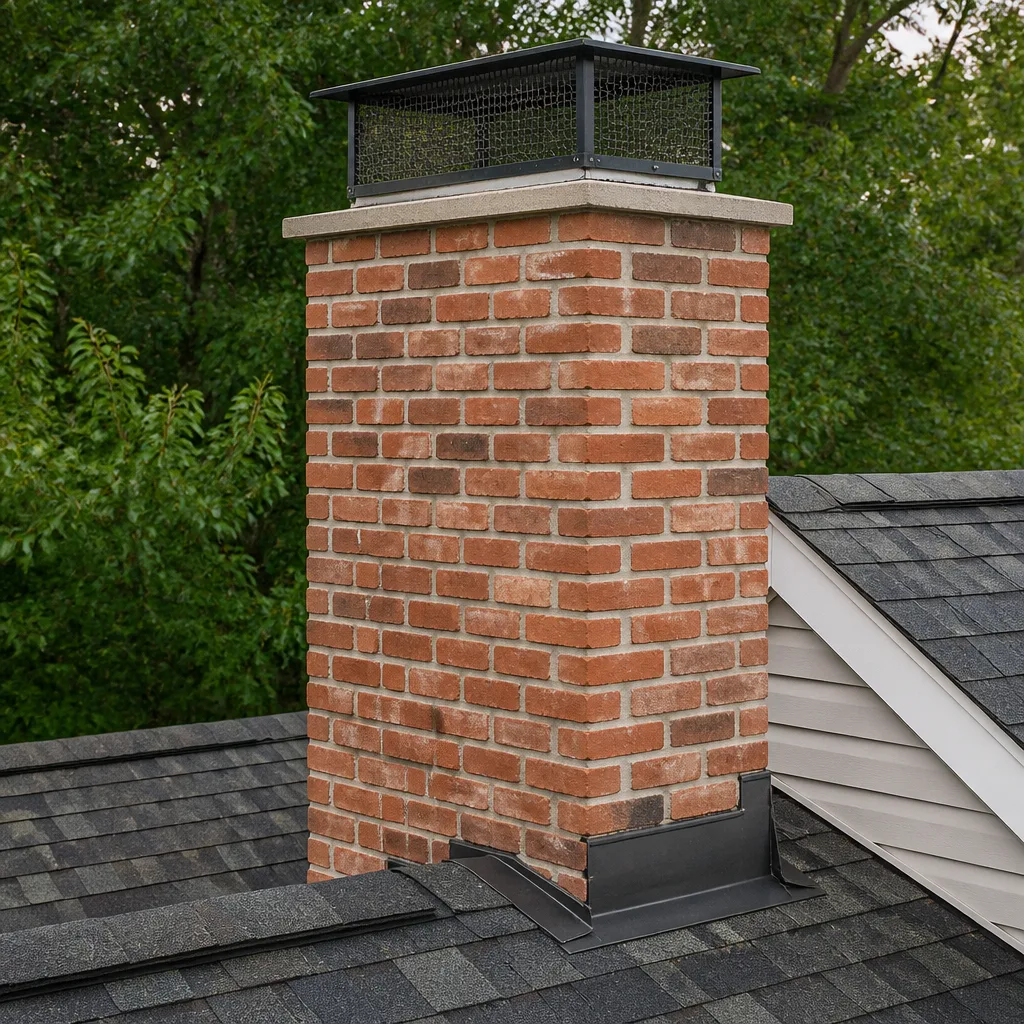
 Masonry repair
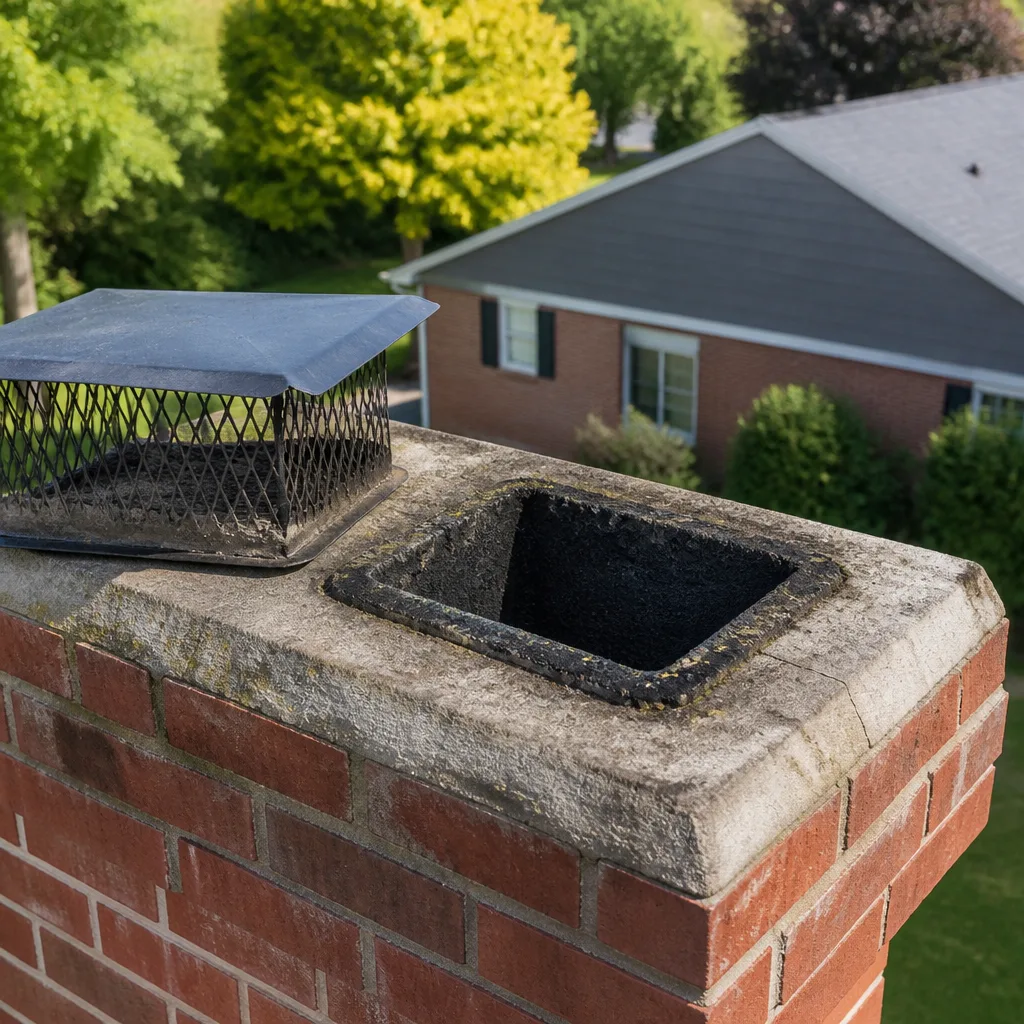 Sweep & inspection
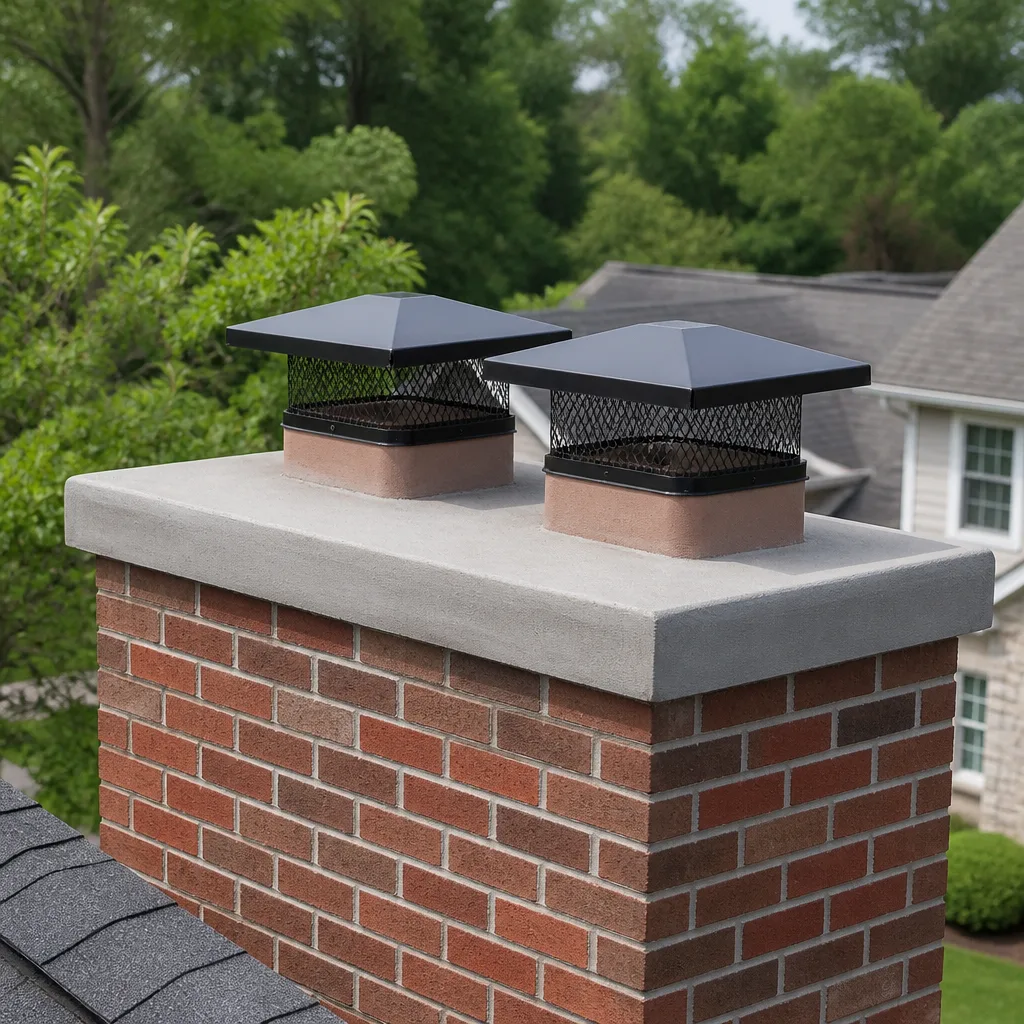 Caps & crowns
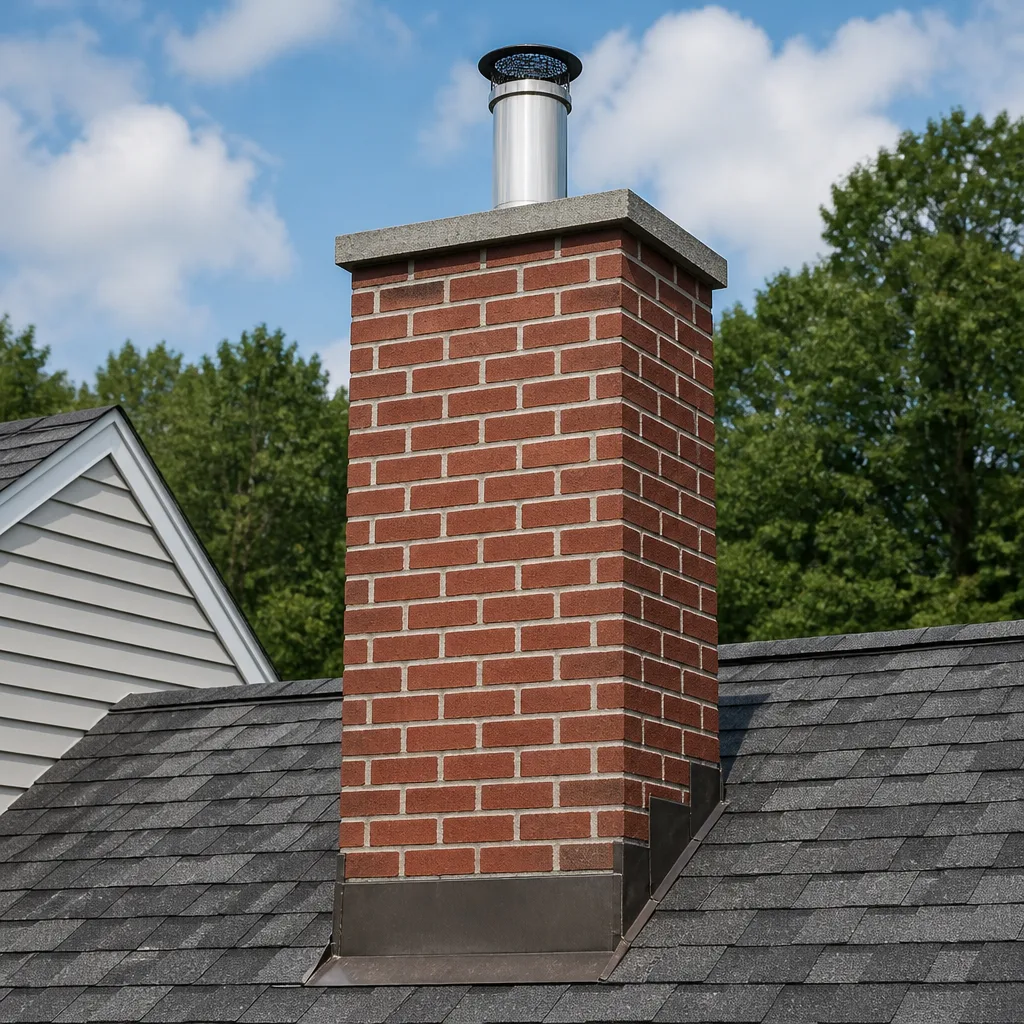 Flue relining
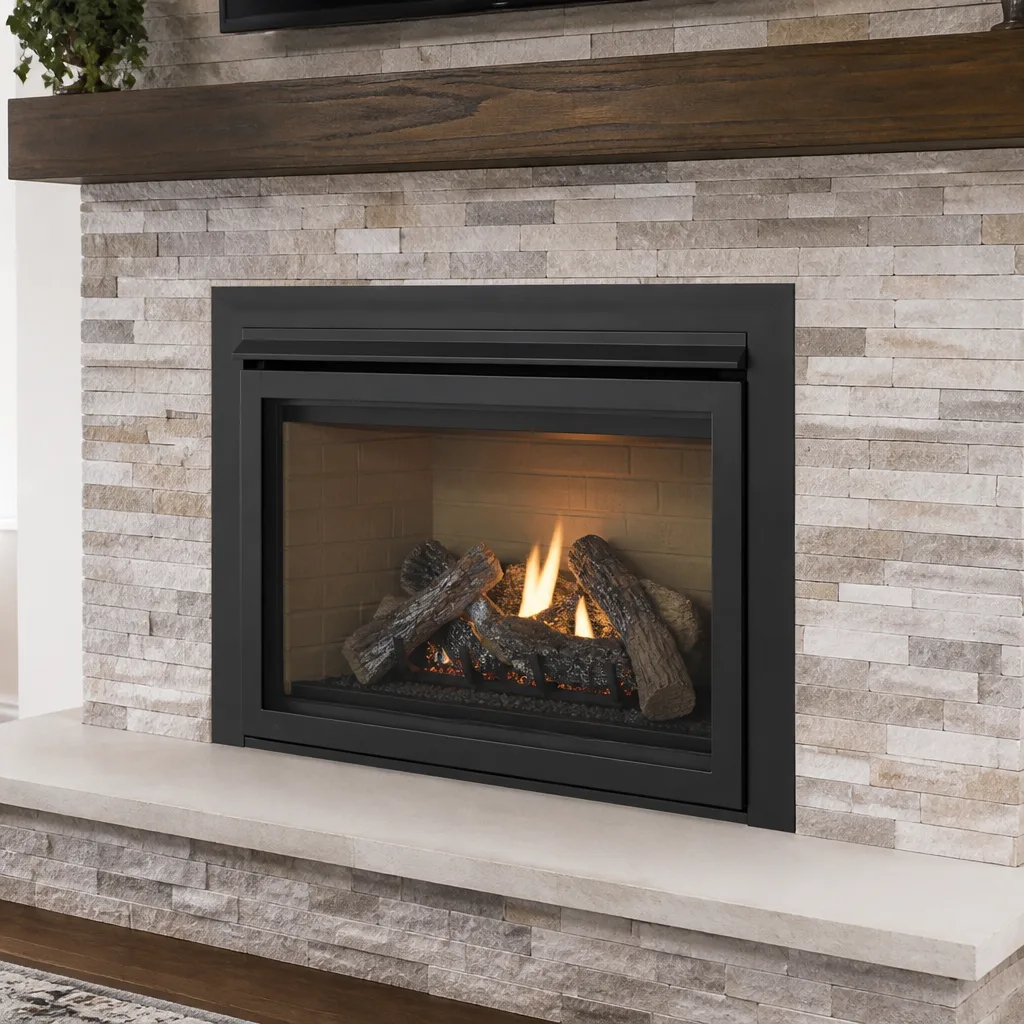 Gas fireplace service
Level 1 sweep and inspection to the NFPA 211 annual standard - flue, crown, cap, and flashing checked and photographed
Chimney sweep logs do not sweep chimneys. They loosen some creosote - which then falls where a brush and vacuum still have to collect it.
Fast, Reliable Chimney Repair Across Fort Worth
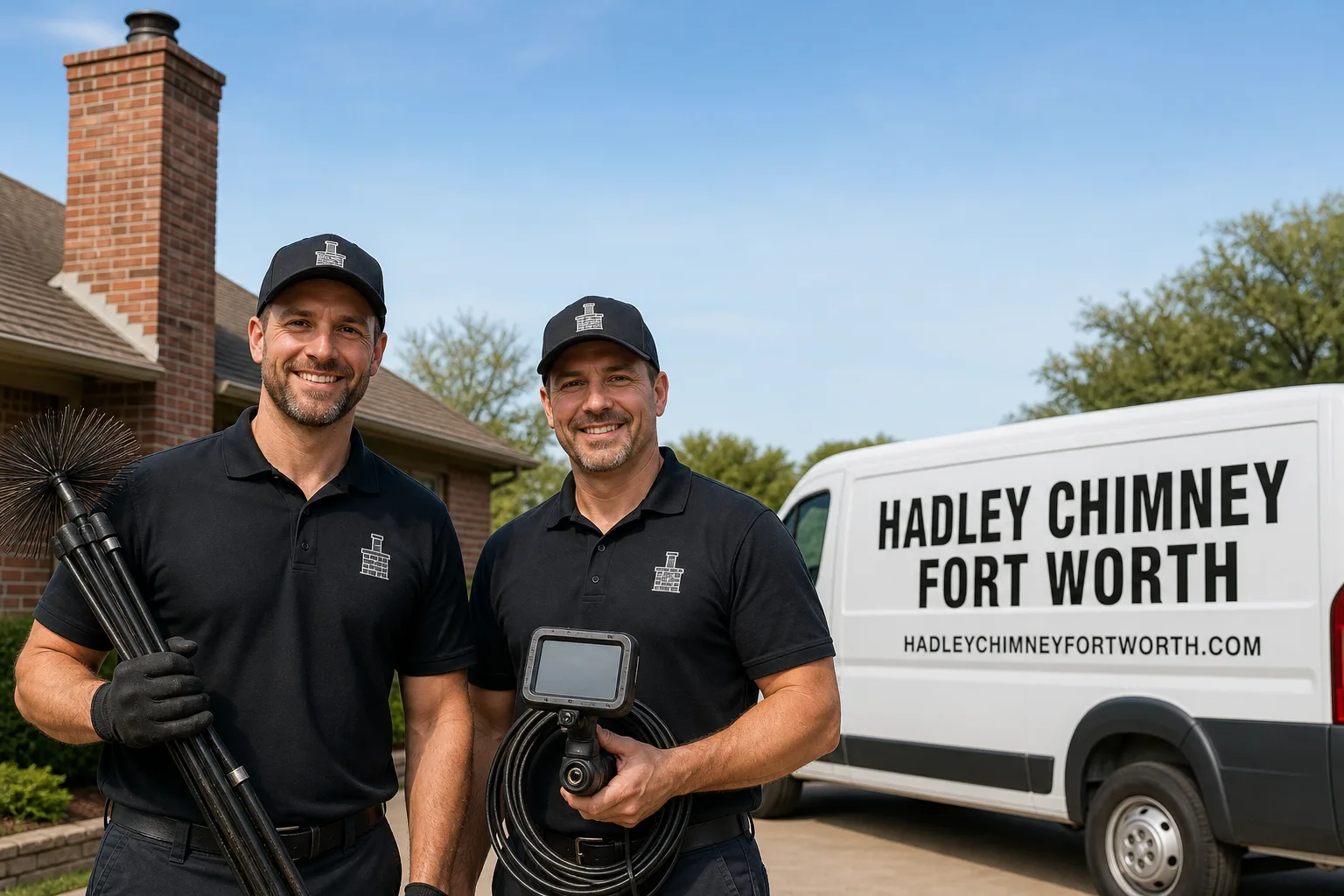
Chimney repair in Fort Worth usually means one of two things: cracked clay tile flues from shifting blackland prairie clay, or mortar joints that have spalled from decades of freeze-thaw cycles. If you’re seeing crumbling brick, water stains on the ceiling near the fireplace, or smoke backing into the room from a chimney that used to draft fine, call Hadley Chimney Fort Worth at (682) 900-6393, and we’ll document exactly what’s happening with a camera before we recommend anything. That camera-first approach matters in Fort Worth because the ground under your home moves more than most homeowners realize, and a cracked flue behind a brick veneer can look perfectly normal from the outside. We’re based in the Dallas-Fort Worth metro with crews serving Fort Worth neighborhoods locally, so a tracked arrival window means you’ll know when we’re actually pulling up, not sitting somewhere in a four-hour window.
Why Hadley Chimney Fort Worth Is Fort Worth’s Preferred Chimney Repair Company
Hadley Chimney Sweep has been doing this work since 2003, and Fort Worth’s housing stock keeps our repair crews busier than any other trade in the metro. Older neighborhoods like Ridglea and Arlington Heights are full of pre-1940s brick chimneys with unlined flues, and newer subdivisions from the 1980s through 2010s have clay tile liners that crack when the expansive blackland clay under the slab heaves. That’s exactly what our Chimney Repair team is built for: not just fixing what’s broken, but documenting why it broke so it doesn’t come back next spring.
Every Hadley technician is background-checked and uniformed, and every repair comes with a written guarantee. If a repair fails within 365 days, we come back and make it right at no charge. That’s our 365-Day Done Right Promise, not a promo. We also work under The Relay Visibility Guarantee, which means you get live arrival tracking, before-and-after photos from the actual inspection camera, and a written price before anyone picks up a trowel or a brush. A live person answers our phones 24/7, so calling (682) 900-6393 means you’re talking to a real human who can book your inspection, not a voicemail tree.
Styles & brands we work with
Chimney Masonry Repair in Fort Worth
Chimney Masonry Repair in Fort Worth typically runs $400 to $2,800 depending on whether we’re repointing a few mortar joints or rebuilding a chimney crown and several courses of brick. Fort Worth’s humid winters and occasional hard freezes mean mortar joints crack and spall faster than homeowners expect, and once water gets behind the brick wythe, the damage compounds quickly. We use the trade term first, then explain it plainly: spalling is when the face of the brick flakes or pops off because trapped moisture expands and contracts, and efflorescence is the white powdery salt deposit you sometimes see on brick chimneys, a sign that water is moving through the masonry where it shouldn’t be.
What We Check First
Before we quote any masonry work in Fort Worth, we inspect the crown, the flashing, the mortar joints, and the flue. We run a camera if we suspect a crack. You’ll see the footage. If mortar repointing is all you need, we’ll tell you that plainly and we won’t try to sell you a rebuild.
When a Rebuild Is Actually Necessary
There’s a point where too many bricks are spalled and too many mortar joints are gone for patching to make sense. When that happens in Fort Worth, it’s often because years of soil movement have shifted the stack enough that patching becomes a temporary fix on a structural problem. We’ll show you the camera footage so you can decide with your eyes, not just our word.
Chimney Cap Installation in Fort Worth
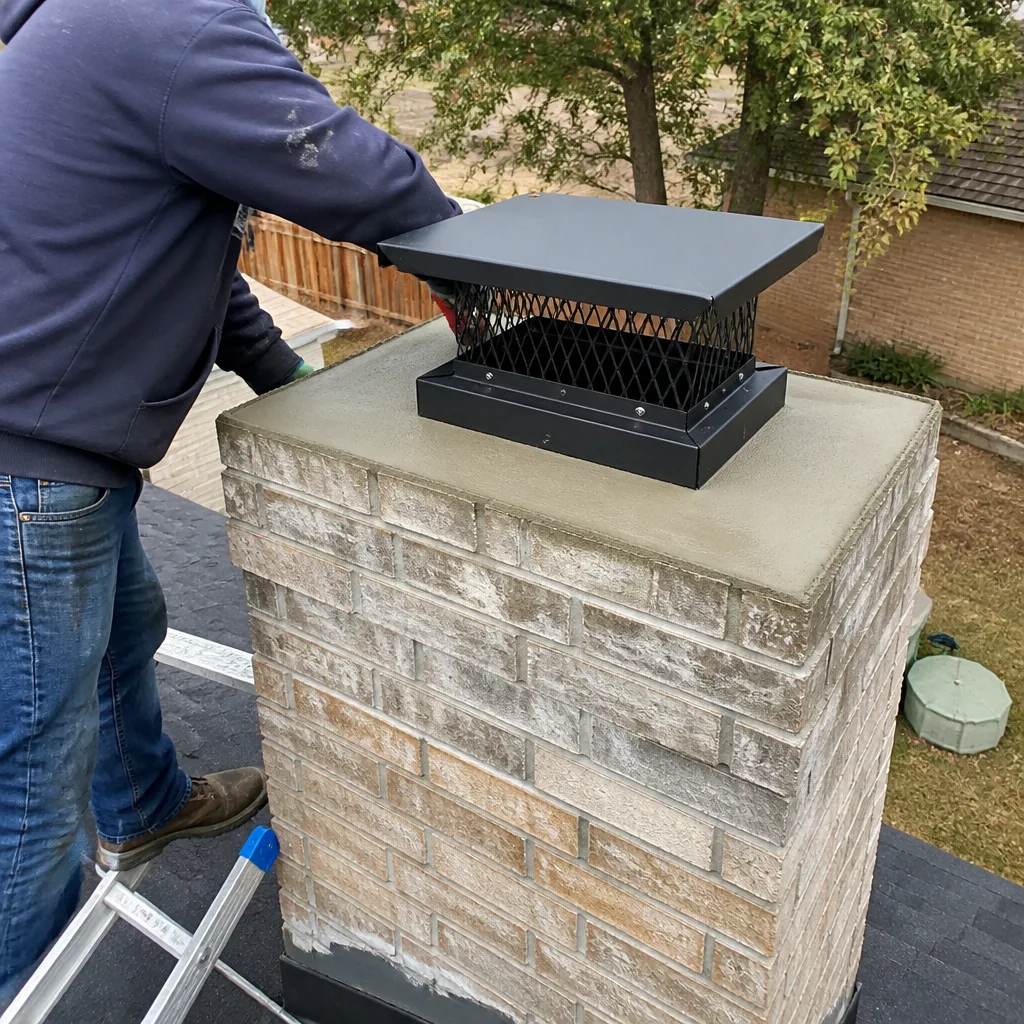
Chimney Cap Installation in Fort Worth typically runs $350 to $850 including the cap and the labor, depending on the flue size and whether we’re installing a single-flue cap or a multi-flue cap with a custom bracket. A cap is the metal hood at the top of the chimney that keeps rain, birds, and debris out of the flue. In Fort Worth, caps do double duty because our spring and fall storms push a lot of water sideways, not just straight down, and an uncapped flue is an open pipe into your masonry.
Rusted or Missing Caps
Texas sun is hard on galvanized metal. We regularly replace caps in Fort Worth that have rusted through in five or six years, especially in neighborhoods like Wedgwood and Western Hills where mature trees drop debris that traps moisture against the metal. A stainless steel cap from Copperfield is what we recommend for most Fort Worth homes because it handles the humidity and the UV exposure better than thin galvanized.
Cap vs. Crown: Know the Difference
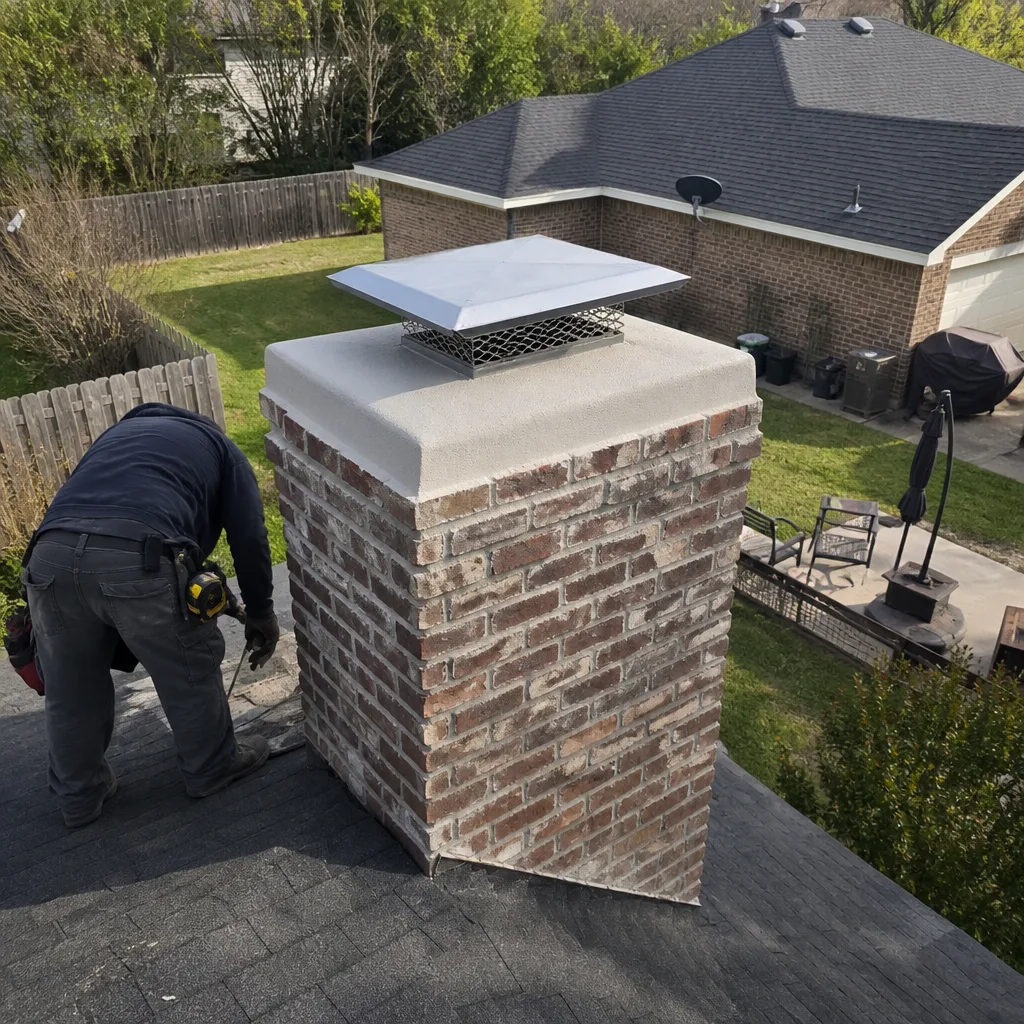
The cap is the metal piece. The crown is the concrete slab at the top of the chimney. Both matter in Fort Worth’s weather, and when we quote a cap installation, we also photograph the crown so you know if water is getting in from above before it even reaches the cap.
Trusted Brands We Service in Fort Worth
We work with brands that professional chimney techs actually rely on: DuraFlex flexible liner systems, HeatShield ceramic resurfacing compound, and Copperfield chimney caps and accessories. That matters for Fort Worth customers because a liner or a cap is only as good as the material it’s made from, and box-store parts fail fast in Texas humidity. We keep common Copperfield cap sizes and DuraFlex liner components stocked for fast turnaround on Fort Worth jobs, so you’re not waiting two weeks for a cap to ship while rain keeps getting into your flue. Whether you have a fireplace that’s original to your Ridglea home or a prefabricated unit in a 2000s build north of I-30, we’ll spec the right part and show you why.
See the difference
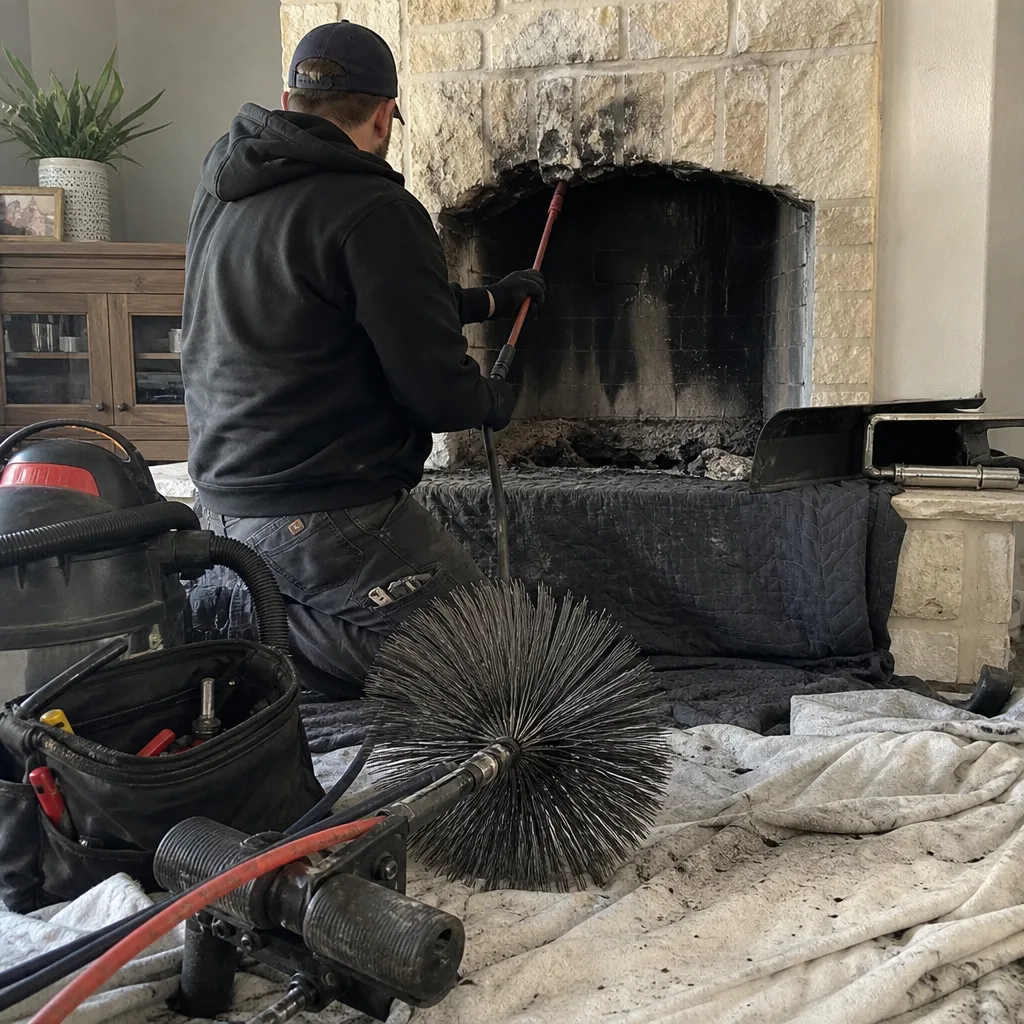 Before
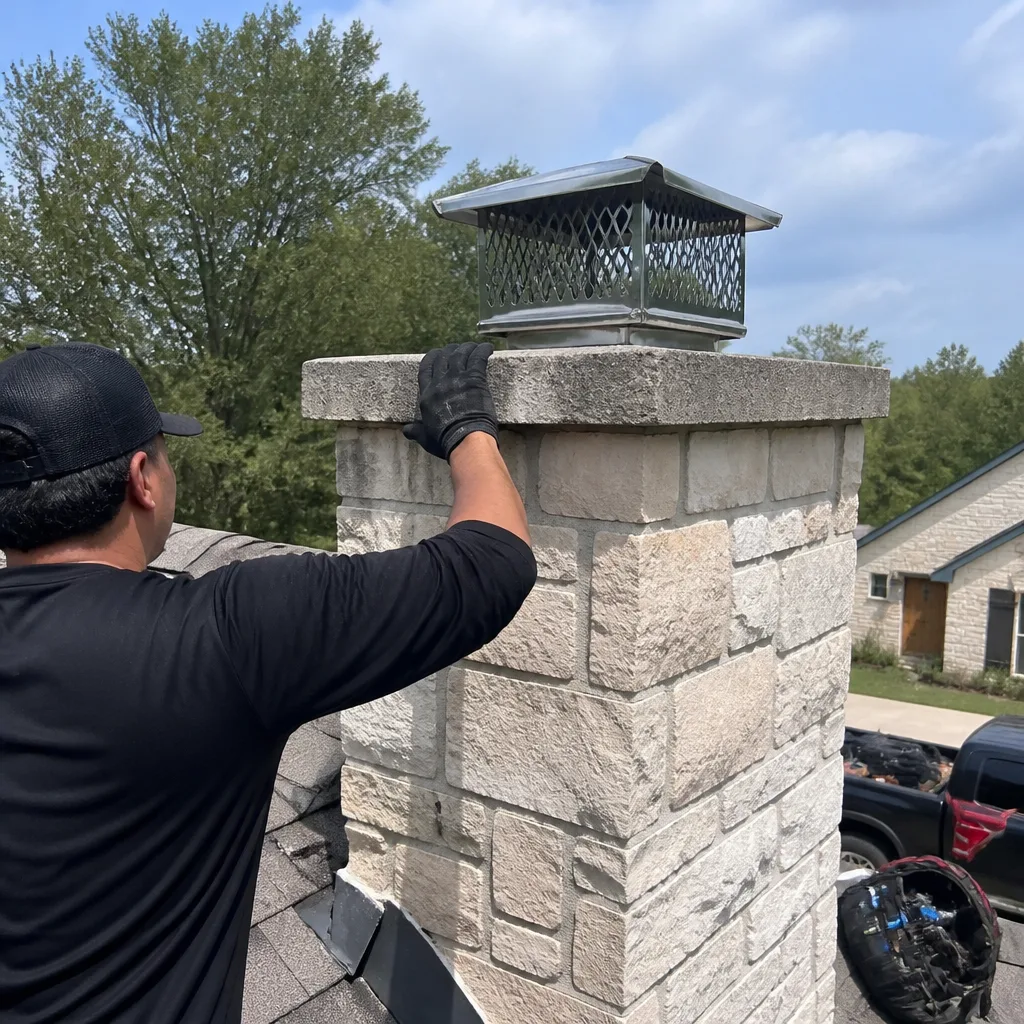 After
After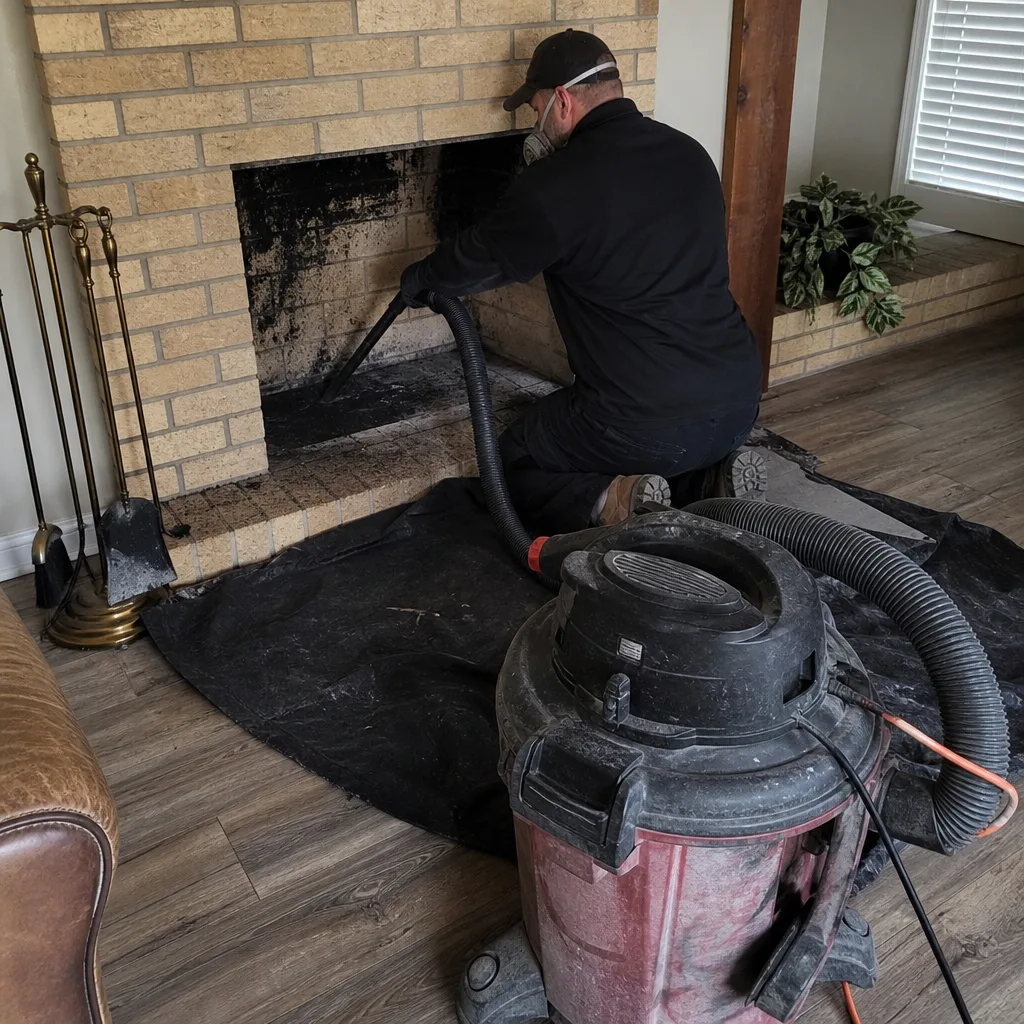 Before
 After
After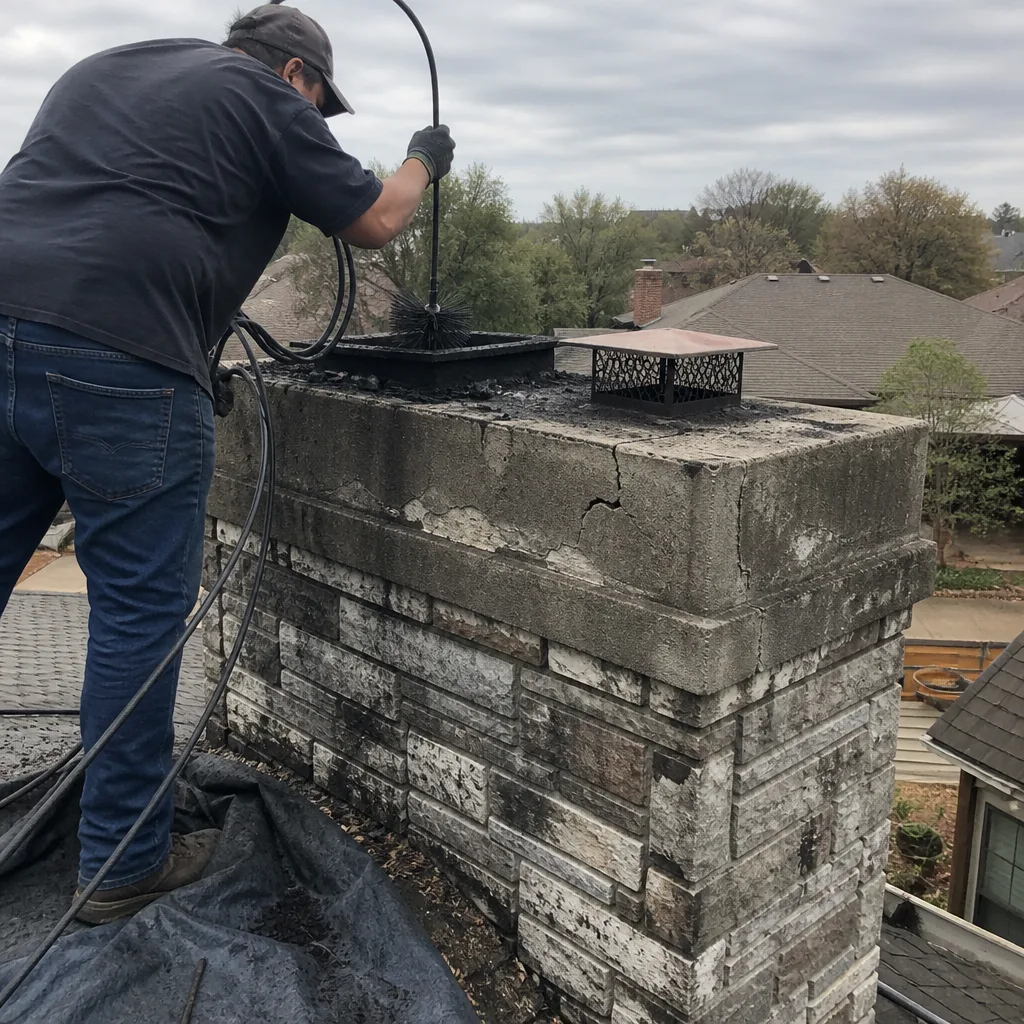 Before
 After
AfterCommon Chimney Repair Problems We See in Fort Worth Homes
- Cracked clay tile flues from soil movement. The blackland prairie clay under Fort Worth expands when wet and contracts in drought. Over years, that cyclical heave shifts brick veneer just enough to crack the clay tile liner behind it, and the homeowner doesn’t know until smoke backs up or a chimney cap sits visibly crooked.
- Spalled mortar joints and brick faces from freeze-thaw cycles. Fort Worth doesn’t have harsh winters by northern standards, but the combination of humid air, occasional freezing nights, and long hot summers means water gets into tiny cracks, freezes, expands, and slowly pops the face off bricks. We see this most on west-facing chimneys that take the full afternoon sun.
- Acidic condensation eating mortar from inside unlined flues. Older homes in Arlington Heights and Ridglea often have chimneys that were built before flue liners were standard. When a modern gas furnace or water heater vents into that unlined stack, the exhaust cools and condenses into acidic moisture that eats mortar from the inside. You can’t see it from the ground. A Level 2 camera inspection shows it immediately.
- Flashing failure at the roofline. Fort Worth’s frequent severe thunderstorms test flashing harder than most climates. When the metal flashing where the chimney meets the roof pulls away or corrodes, water runs straight into the attic and down the chimney chase. We see this after every major hail season, especially on homes in Haltom City and north Fort Worth.
Pricing for Chimney Repair in Fort Worth, TX
We Also Serve Cities Near Fort Worth
Hadley Chimney Fort Worth serves the Fort Worth metro and the surrounding communities. We cover Haltom City, Keller, Colleyville, and Mansfield with the same tracked arrival window and camera-documented inspections we provide across Fort Worth. If you’re in one of those cities and your chimney has the same clay soil issues we see everywhere in Tarrant County, call the same number: (682) 900-6393.
Serving Fort Worth, TX - Our Local Coverage Area
We’re based in the Fort Worth area and know this community well. Use the map below to see our service coverage - if you’re nearby, we can almost certainly help.
FAQs About Chimney Repair in Fort Worth
The ‘Fort Worth lean’ is when the outer brick wythe separates slightly from the clay tile flue behind it because the expansive blackland prairie clay under your slab has heaved over years of drought and rain cycles. You might notice a visible gap between the brick and the chimney cap, a cap that sits off-kilter, or a crack running up the mortar at a slight diagonal. The only way to confirm it is with a Level 2 camera inspection. We run the camera, show you the footage, and only then quote a repair. Call (682) 900-6393 to schedule an inspection.
A chimney cap is the metal hood over the flue opening that keeps rain and animals out, and a chimney crown is the concrete slab that forms the top surface of the masonry chimney. Fort Worth’s freeze-thaw cycles crack crowns quickly because water pools on top and expands when it freezes. A cracked crown lets water into the brick wythe, and then the spalling starts. We address both in one visit because fixing one without checking the other leaves water a path in.
Usually not safely. Chimneys built before the 1940s in Arlington Heights and Ridglea often have no flue liner at all, which means modern gas appliance exhaust with its acidic condensation attacks the old mortar from the inside. You can’t see this damage from outside. A Level 2 camera inspection will show you exactly what’s happening before anyone recommends a liner or a repair. We’ll show you the footage, and only then do we quote anything. For an exact assessment, call (682) 900-6393.
Creosote, the flammable tar buildup that makes chimneys a fire risk, hardens into a glazed, baked-on layer when your chimney sits unused through Fort Worth’s hot, humid summers. The heat bakes the creosote into the flue walls, and once it glazes, a standard brush won’t remove it. That’s when we bring in a rotary cleaning head with chains and specific chemical treatments to break it down. It’s why we recommend sweeping in early fall before you light the first fire of the season.
The same expansive clay that cracks slab foundations also moves chimneys. As the soil heaves and contracts through wet and dry cycles, the brick veneer shifts slightly, which pulls the flashing at the roofline and opens gaps where water gets in. We regularly see this in Wedgwood and Western Hills after a drought year followed by a wet spring. The fix is proper flashing installation with proper sealant, plus masonry repair if the movement has already cracked the stack. Call (682) 900-6393 for an inspection if you see water stains near your chimney.
Written by Cory Mitchell, Owner at Hadley Chimney Fort Worth, serving the Dallas-Fort Worth metro since 2003.